
If your home sits anywhere near Colorado’s wildland-urban interface, the materials on the outside of it matter more than they would almost anywhere else.
Fiber cement is one of the better answers, and it’s worth being precise about what it does. It won’t burn and it won’t carry flame across a wall. It also won’t stop heat from conducting through to what’s behind it, and no cladding will. Here’s what that means in practice.
Protecting Your Home’s Exterior with James Hardie Fire-Resistant Siding
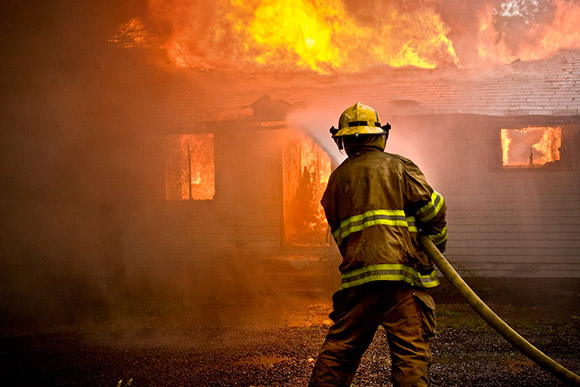
From Colorado’s grasslands to its mountains, nearly every part of the state is vulnerable to wildfires. In the wildland-urban interface, those areas where wildland fuels coexist with human development, fires catch and burn easily.
If you live in or near a mapped WUI area, hardening your home is worth taking seriously, particularly now that the Colorado Wildfire Resiliency Code sets material requirements there. James Hardie siding is one part of that. Requirements vary by jurisdiction. See what applies in Boulder, Evergreen, and Parker.
Degrees of Flame-Spread
People talk about homes being fireproof, and no home is. What exists instead is a scale, and where a material sits on it is measured rather than claimed. One of the main measures is flame spread, which is how readily fire travels across a surface.
The degrees of flame spread are identified using an I-II-III or an A-B-C classification system. The two systems are equivalent. For building materials, the designations are:
- Class A or I – Flame-spread index of 25 or less
- Class B or II – Flame-spread index of 26-75
- Class C or III – Flame-spread index of 76-200
The main thing to remember about these systems is that Class A or I materials are the safest, while Class C or III allows flames to spread the most and the fastest.
Your Home’s Structural Integrity
Whether a house ignites in a wildfire comes down to several things, and siding is one of them. Roof assembly, vents, decking, and what’s within thirty feet of the walls all matter too.
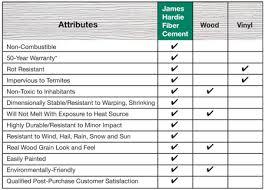
Hardie board is made from cellulose fibre, cement, and sand, which is why it’s classified non-combustible under ASTM E136. It won’t ignite from windborne embers, and embers are how most homes are lost rather than from direct flame. It buys time rather than guarantees an outcome. That distinction is the whole point of this article.
Hourly Ratings
Hourly ratings have been developed to test building materials for combustibility. The time factor is how long the building material can withstand heat from a fire without allowing the structure to catch fire. Remember that what matters in these ratings is not whether the surface ignites but whether the surface gets so hot that it conducts enough heat to ignite the materials on the other side of it.
How James Hardie Siding Products Stack Up
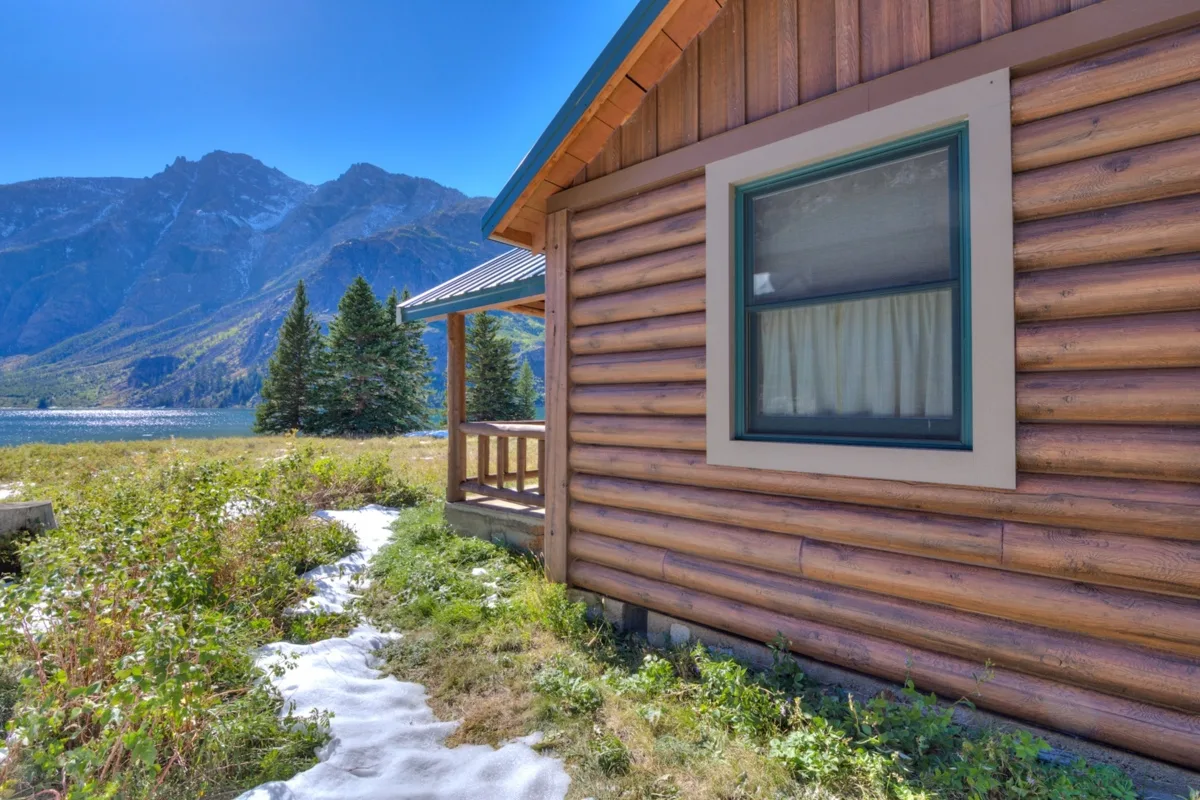
James Hardie fiber cement siding panels are considered masonry products. So, they have all the same attributes as stone, brick, and stucco, including fire resistance. For mountain homes that want a log look, concrete log siding offers similar fire resistance.
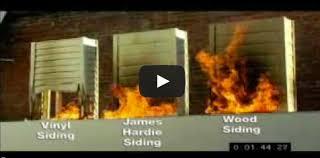
As for flame spread, James Hardie siding has an index of 0, meaning that it won’t allow the fire to spread directly. It is important to understand that while Hardie Board is a fire-resistant house siding, it will not stop heat from conducting to the interior. You need to make sure to combine this siding with a fire-resistant wall assembly. The Hardie board fire rating itself is not 1-hour fire rated. However, it can qualify for use in certain 1-hour fire-rated assemblies.
HardieBacker® is a different product: a cement backer board used as a tile underlayment on floors, walls, and countertops. It’s made from similar materials, but it’s an interior product and isn’t a substitute for exterior cladding.
James Hardie’s Wall Assembly
Hardie siding combined with HardieWrap® and rigid foam insulation performs better as an assembly than the cladding does alone, because the layers behind the board are what slow heat transfer.
Worth noting that the non-combustible classification applies to the fiber cement itself, not to paint applied over it. James Hardie says so directly, and it’s the caveat most often left out.
Is Your Home in a Mapped WUI Area?
If it is, material choice stops being a preference and starts being a code question. We can tell you what applies at your address and what it means for your options. If you’re still comparing materials, our overview of fire-resistant siding for Colorado homes walks through them. Call us at (720) 683-6288 or contact GS Exterior Experts to arrange a look at your property.