
Tangled between fiber cement siding and stucco? You are not alone. A majority of house owners find it troubling to choose between cement siding and stucco. Both of them have specific benefits and downsides. In this blog, we will juxtapose two popular siding options to help you choose the most suitable one for your home.
Fiber Cement Siding vs Stucco will remain a forever debate, let’s briefly discuss their attributes one by one.
Fiber Cement Siding:
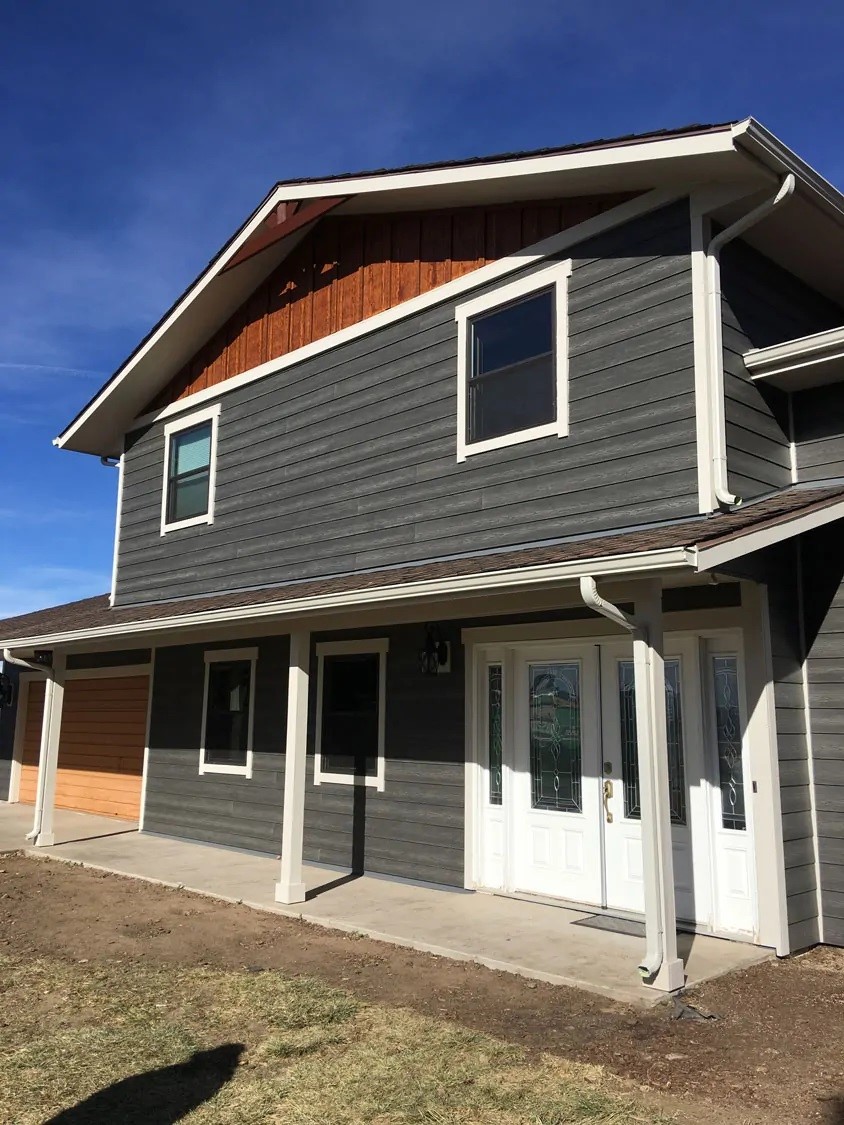
As the name suggests, it is cement mixed with wood fiber. Essentially, the ingredients included in fiber cement include cement, water, sand, and cellulose fiber. While the composition can vary from manufacturer to manufacturer, there is at least 8-10% of wood fiber in fiber cement siding that increases its durability and strength. Fiber cement does not rot, warp, or attract termites, and it needs only periodic washing rather than a repaint cycle. It also holds a wood-grain texture convincingly, which is why it suits homes where the look of timber matters but the upkeep does not.
If you are thinking about fiber cement board vs stucco, you must not confuse yourself. A fiber cement board is a lightweight board that is made of cement, silica, and natural fibers. It is commonly used for the exterior and interiors of buildings as it is water-resistant and does not rot, warp, or shrink. The best thing is that it can be coated and painted.
Advantage of Fiber Cement Siding:
- Longevity:
Fiber cement is a contemporary siding option that is manufactured scrupulously to enhance its durability and longevity. It does not absorb water the way wood does, so it will not rot and stays dimensionally stable through freeze-thaw cycling. James Hardie backs the substrate with a 30-year non-prorated warranty.
- Fire Resistant:
Fiber cement is classified as non-combustible under ASTM E136, with a flame spread index of zero under ASTM E84. That matters in Colorado’s wildfire-exposed areas, though cladding is one part of the picture: roof assembly, vents, decking, and defensible space all affect how a home performs.
- Storm Resistant:
Fiber cement holds up to wind and windborne debris better than vinyl or aluminum. Note that no cladding is hail-proof, and severe hail can crack fiber cement, as it can damage any material.
- Low maintenance:
Fiber cement requires very little maintenance. A wash once or twice a year is usually enough. With a factory-applied ColorPlus® finish there is no repaint cycle, which is the maintenance cost that adds up on painted claddings.
- Appearance:
Fiber cement is available in wood-grain textures that read convincingly as timber from the street, as well as smooth and stucco-look finishes. That range is one of its practical advantages over stucco, which is limited to textured finishes.
Stucco:
Stucco, another popular option of siding, is cement-based siding. Its composition includes cement, sand, water, and lime, and it adds a textured finish to the walls. You can find a variety of stuccos that come in different colors and textures, and two main types of stucco systems, known as the 3-coat system and the 1-coat system.
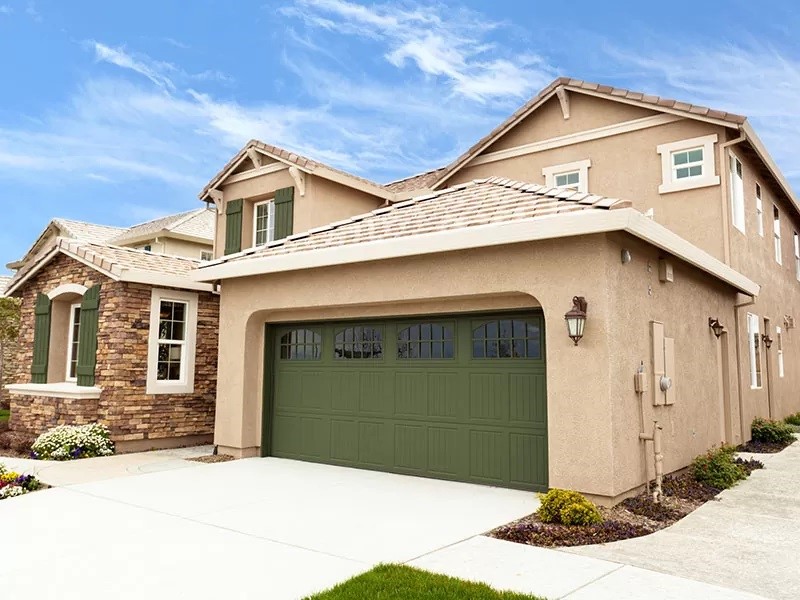
Advantages of Stucco:
- Durability:
Correctly installed stucco lasts decades and will not rot. In Colorado, hairline cracking from freeze-thaw cycling and soil movement is normal over time and is straightforward to repair.
- Low maintenance:
As long as the stucco is mixed and installed well, it will remain undamaged for years, with very minimal maintenance required.
- Non-combustible:
Traditional cement stucco does not burn. Installed over the right substrate, it can also form part of a one-hour fire-rated wall assembly.
- Noise Resistant:
The stucco is noise impermeable and cuts the outside noise, keeping your house calm and polite.
- Mass, not insulation:
Stucco is dense, and density is not insulation. Its R-value is around 0.2, and the insulation that matters sits in the wall assembly behind it.
Fiber Cement Siding vs Stucco Cost
At the time of writing, fiber cement siding costs $5.00 to $13.50 per square foot on average, while stucco ran between $6 and $9 per square foot. Material and labor prices have moved since, so treat these as a guide to the relationship between the two rather than current numbers.
Installed costs overlap considerably, and the range on fiber cement is wide because product line and trim detail vary so much. Stucco pricing depends heavily on whether the existing substrate needs remediation, which is often not visible until work starts. We quote both per project rather than per square foot.
Is Fiber Cement Siding Worth It?
We install James Hardie on most projects. It engineers products by climate zone, with the HZ5 line specified for Colorado, and backs the substrate with a 30-year non-prorated warranty. Nichiha is the alternative where architectural panel formats suit the design better.
Is Fiber Cement Siding Worth the Cost?
It costs more upfront than vinyl or stucco and less than masonry. The case for it is that you avoid a repaint cycle and get a 30-year warranty, so the maths improves the longer you stay in the house.
Is Siding Better Than Stucco?
Neither is universally better, but they suit different situations.
Choose fiber cement if you want a wood-grain or lap look, a long manufacturer’s warranty, and no repaint cycle.
Choose stucco if you want a seamless textured finish, your home’s architecture calls for it, or you are matching existing stucco elsewhere on the elevation.
One Colorado note: if you have existing stucco that is cracking, it is worth finding out whether the cracking is cosmetic or a sign of moisture behind it before deciding whether to repair or replace. We can tell you which. Get in touch and we will look at it.