
Summary:
- Fiber cement holds a deep wood grain that stays convincing for decades, where vinyl’s moulded grain reads as thin and real wood greys as it weathers.
- Fire is where the gap is widest: vinyl melts, wood is combustible, and fiber cement is classified non-combustible under ASTM E136.
- Fiber cement does not absorb water, so freeze-thaw cycling has far less to work with than it does on cedar.
- The trade-off is cost. Fiber cement runs more than both alternatives and carries a 30-year non-prorated warranty against them.
- GS Exterior Experts installs fiber cement across the Denver metro and can weigh profiles, colours, and costs against your home’s exposure.
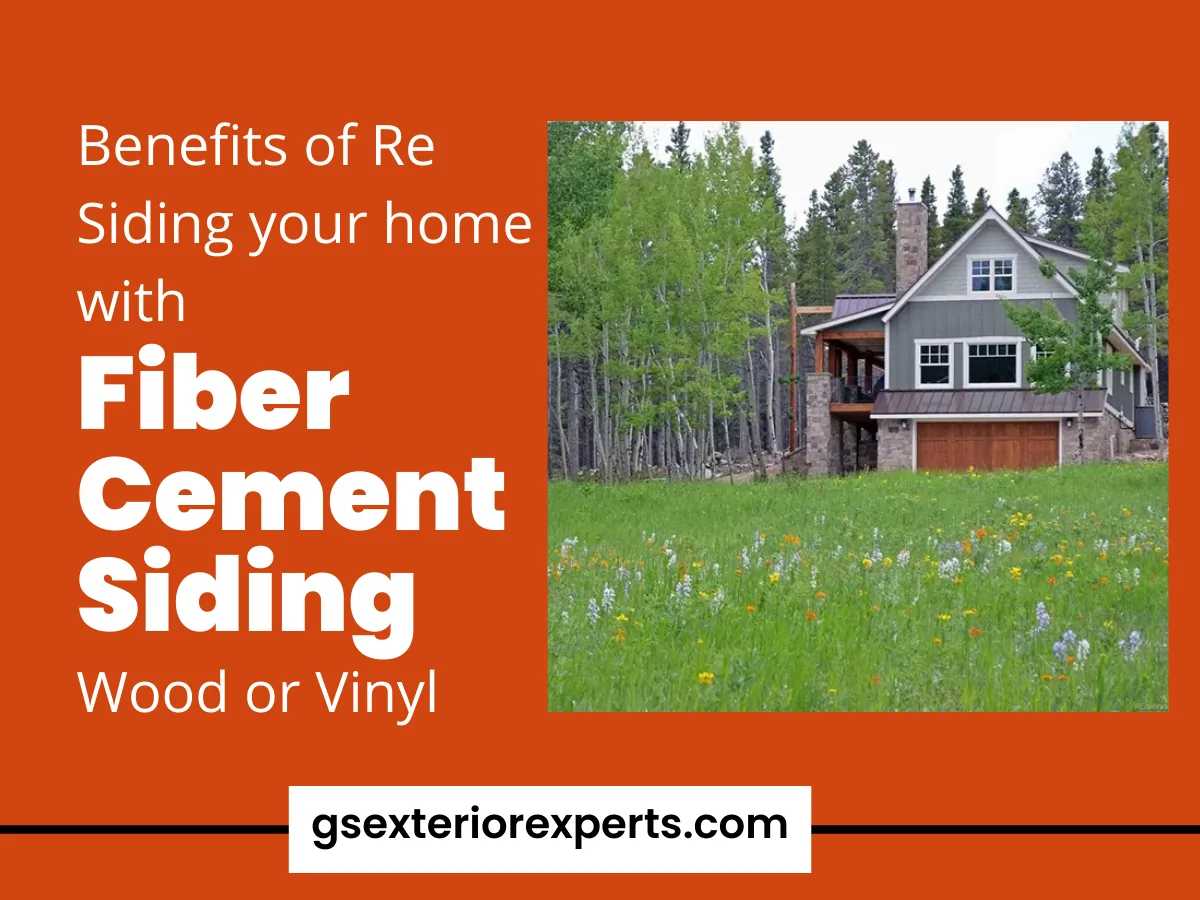
Benefits of Re-Siding Your Home with Fiber Cement Siding vs Wood or Vinyl
Re-siding your home is a significant undertaking. When you see the project completed, you want a home you can be proud to own. Just as important, you want your home to withstand the weather and last for years to come. If you choose the right option for your exterior siding, you can accomplish both. Here is how fiber cement compares against wood and vinyl on the three things that decide it: how it looks, how it handles fire, and how it handles weather. Cost comes at the end, because it is the trade-off.
Appearance
The siding of your home can detract from or contribute substantially to its curb appeal. The siding not only needs to look great when the project is completed. It also needs to look beautiful for many years, even decades, into the future.
Wood Grain Effects
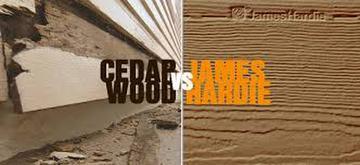
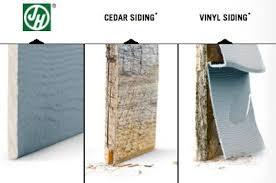
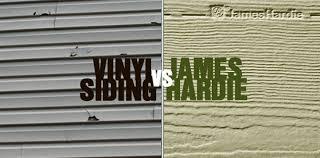
Vinyl’s wood grain is molded into a thin PVC panel, and the shallow depth is what gives it away at close range. Wood has the real thing, though it greys and the grain softens as the surface weathers. Fiber cement is deep enough to hold a grain that still reads as timber at ten years. Wood siding has a distinct wood grain, of course. Yet, because it’s so easily damaged, the wood grain doesn’t retain its beauty over time. By contrast, fiber cement has a deep, natural-looking grain that holds up no matter what the weather. If you want authentic wood character with engineered durability behind it, Woodtone siding splits the difference.
Here’s how fiber cement and wood siding compare across eight key factors.
Styles and Colors
Fiber cement siding comes in a wide variety of elegant styles and colors. James Hardie comes in horizontal lap, vertical panel, and shingle profiles, so it covers what vinyl and cedar each do separately. And, like wood, you can get fiber cement siding that looks like cedar shingles. In both cases, the fiber cement siding continues to give a more attractive appearance over the years.
Fire Resistance
This is the clearest difference of the three. Vinyl is PVC and melts well below the temperature of a wildfire. Wood is combustible. Fiber cement is classified as non-combustible under ASTM E136, with a flame spread index of zero under ASTM E84.
Worth being precise about what that means. Non-combustible cladding will not ignite from windborne embers, which is how most homes are lost. It does not make a house fireproof, and roof assembly, vents, decking, and defensible space all matter as much. If your property sits in a mapped wildfire area, the code may require non-combustible cladding regardless.
On sun rather than fire: vinyl fades faster at altitude than at sea level. Fiber cement with a ColorPlus® finish carries a 15-year warranty against fading, and compared against stucco both are non-combustible.

Weather Resistance
The mechanism that matters in Colorado is freeze-thaw. Wood absorbs water, which expands when it freezes, and repeated cycles split boards and open joints. We cross freezing and thawing more often here than almost anywhere in the country.
Fiber cement does not absorb water the way timber does, so the cycle has far less to work on, and it stays dimensionally stable rather than moving with every temperature swing. With a factory finish, there is also no re-staining cycle, where cedar needs it every three to seven years at altitude.
Cost
This is where fiber cement gives something back. Vinyl is the cheapest of the three to buy and install. Cedar sits in the middle of the materials and costs more over time, because of the re-staining. Fiber cement costs the most upfront, and it is heavier and slower to install, which shows in the labor.
Whether the premium works out depends on how long you are staying. Over twenty years and a 30-year non-prorated warranty, it usually does. Over three years before a sale, it usually does not, and vinyl or engineered wood is the sensible call. Our siding pricing guide has current Colorado figures.
Ready to Re-Side Your Colorado Home?
On appearance, fire, and weather, fiber cement has the stronger case. It holds its grain, it is non-combustible, and freeze-thaw has less to work on. On cost, vinyl wins and it is not close. Which matters more depends on your house and how long you are staying. For the full breakdown, see the benefits of James Hardie fiber cement products.
GS Exterior Experts installs fiber cement siding throughout the Denver metro, and we can walk you through profiles, colors, and pricing for your specific home. Explore our siding installation and replacement services, or call (720) 683-6288 for a free, no-obligation estimate.