
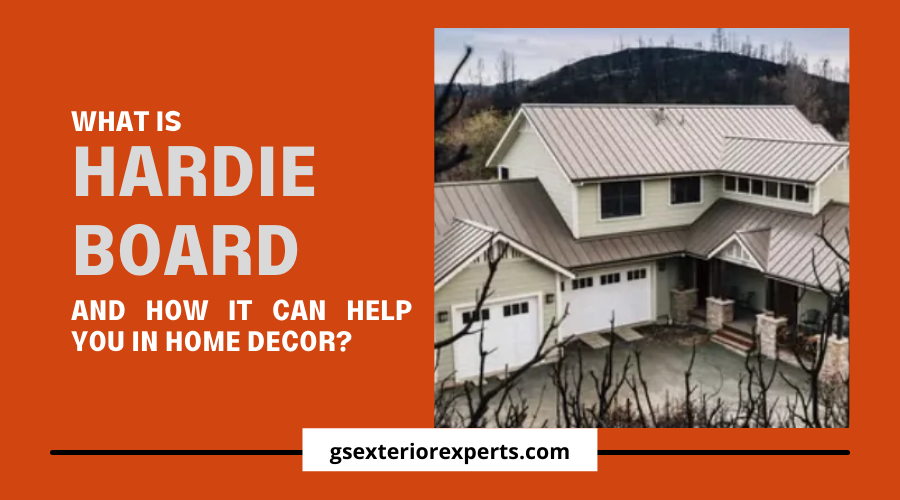
Hardie board is the common name for James Hardie’s fiber cement siding. It’s one of the most widely installed cladding materials in the country, and in Colorado, it’s what we specify on most projects.
Here’s what it’s actually made of, what it does well, and what it asks in return.
What is a Hardie Board?
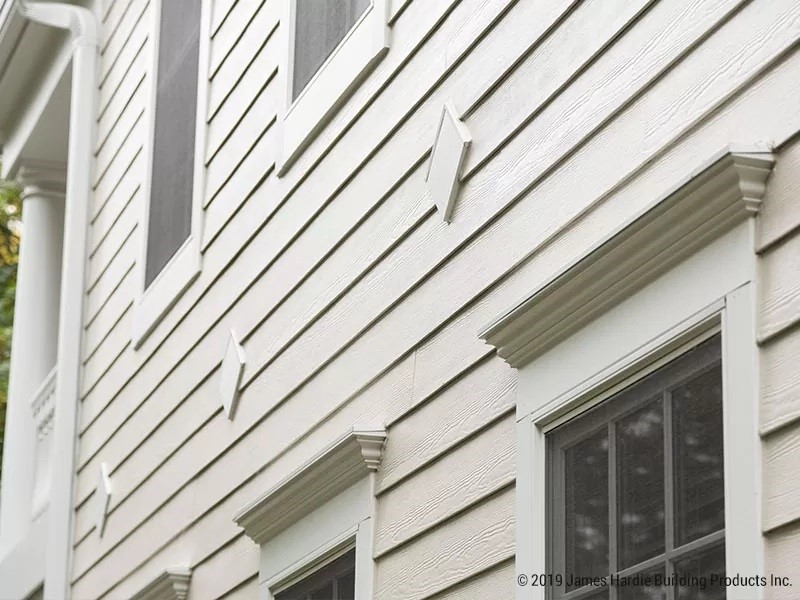
Hardie board is James Hardie’s fiber cement siding, made from Portland cement, sand, cellulose fiber, and water. That mix is why it won’t rot or warp and why termites have no interest in it.
It’s also classified as non-combustible under ASTM E136, and it holds a wood grain convincingly enough that most people can’t tell from the street. Maintenance is low rather than zero: it needs washing periodically, and if it’s field-painted rather than factory-finished, it needs repainting eventually.
Pros Of a Hardie Board
Those are the basics. Here’s what actually makes fiber cement worth the extra cost over vinyl or engineered wood, and where it genuinely earns its place on a Colorado house.
- Longevity
Fiber cement doesn’t absorb water the way wood does, so freeze-thaw cycling has far less to work with and the boards stay dimensionally stable. James Hardie backs the substrate with a 30-year non-prorated warranty, which is unusually long to be covered without the value stepping down.
- Fire Resistant
Fiber cement is classified as non-combustible under ASTM E136, with a flame spread index of zero under ASTM E84. In Colorado’s wildland-urban interface, that matters, since the Wildfire Resiliency Code can require non-combustible cladding.
Worth being clear that cladding is one part of the picture. Roof assembly, vents, decking, and defensible space all affect how a house performs, and the classification covers the board rather than the paint applied over it.
- Wind and Impact
Fiber cement is denser and heavier than vinyl or aluminum, so it holds up better to wind and windborne debris. No cladding is hail-proof, though, and severe hail can chip fiber cement as it damages any material.
- Low maintenance
A wash once or twice a year is usually enough. With a factory-applied ColorPlus® finish, there’s no repaint cycle, which is the maintenance cost that adds up over time on painted claddings.
- Appearance
It is not just the quality of the Hardie board that has become an attractive force for the homeowners, but also the appearance. It mimics the high-end appeal of wood, delivering a sublime and subtle appeal. It means that by selecting Hardie board siding, you neither have to compromise on the quality nor on the appearance.
- Versatile
With Hardie board, you can get a large selection of styles, colors, and designs to choose from. Choose the one that suits the architectural style of your house and your personal preference.
Worth saying what fiber cement doesn’t do. It costs more than vinyl or engineered wood upfront, it’s heavier to handle, and it needs cutting with the right equipment and dust control. On a tight budget, that matters.
What Is The Hardie Board Used For?
Hardie board is the most popular material for siding. Siding is covering the exterior of the home to protect it from elements such as storms, hail, winds, and termites, to name a few. In America, the majority of people prefer Hardie board for siding as it provides great strength, water, and fire resistance, and is impermeable to termites.
What Is HardiePanel?
HardiePanel Vertical Siding is a specific product: large-format sheets installed vertically, usually with battens over the joints for a board-and-batten look.
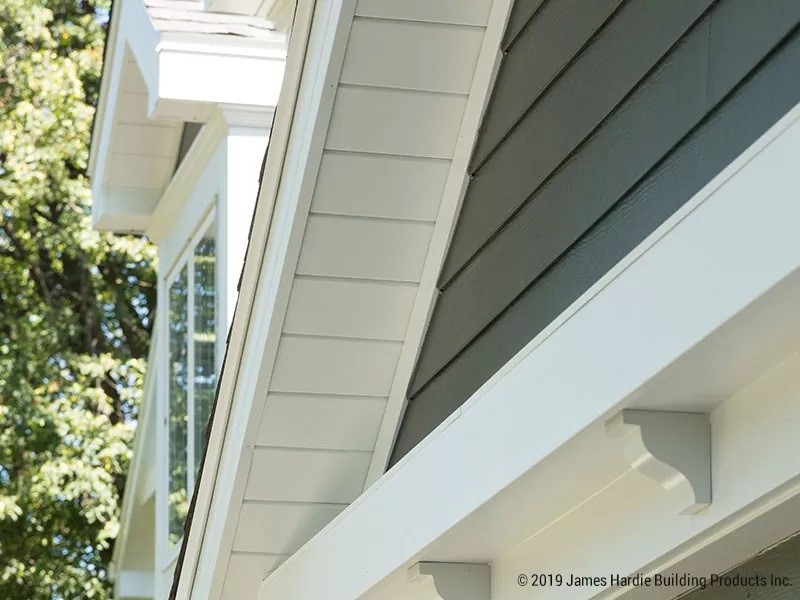
“Hardie board” is the informal name people use for James Hardie fiber cement generally, which covers HardiePlank lap, HardieShingle, and HardiePanel. They’re different products made of the same material.
What About HardieBacker?
HardieBacker® is a different product from the siding. It’s a cement backer board used as a tile underlayment on floors, walls, and countertops, chosen because it won’t swell or deteriorate the way a wood-based substrate can when tile grout lets moisture through.
It’s worth knowing the distinction, because the two get confused. If you’re researching siding, HardiePanel and HardiePlank are what you want. If you’re tiling a bathroom floor, HardieBacker is the one.
Thinking About Hardie for Your Home?
Fiber cement suits Colorado conditions well, and it costs more than vinyl or engineered wood, which is the trade-off worth weighing. We’re a James Hardie Elite Preferred Contractor, so we can walk you through the product range and what each option costs installed. Contact GS Exterior Experts, and we’ll come out and take a look at your house.