
Summary:
- For Denver multi-family properties, impact-resistant (Class 4) shingles can pay for themselves through fewer hail claims, negotiated insurance credits, and longer roof life.
- Colorado’s roofing discount laws are written for homeowner policies, but on commercial habitational coverage, a documented Class 4 roof is still a credit worth negotiating at renewal
- The payoff isn’t only financial: fewer storm-driven re-roofs means less disruption for residents, parking, and building access.
- GS Exterior Experts helps Denver property managers spec, phase, and document Class 4 roofing across multi-building properties.
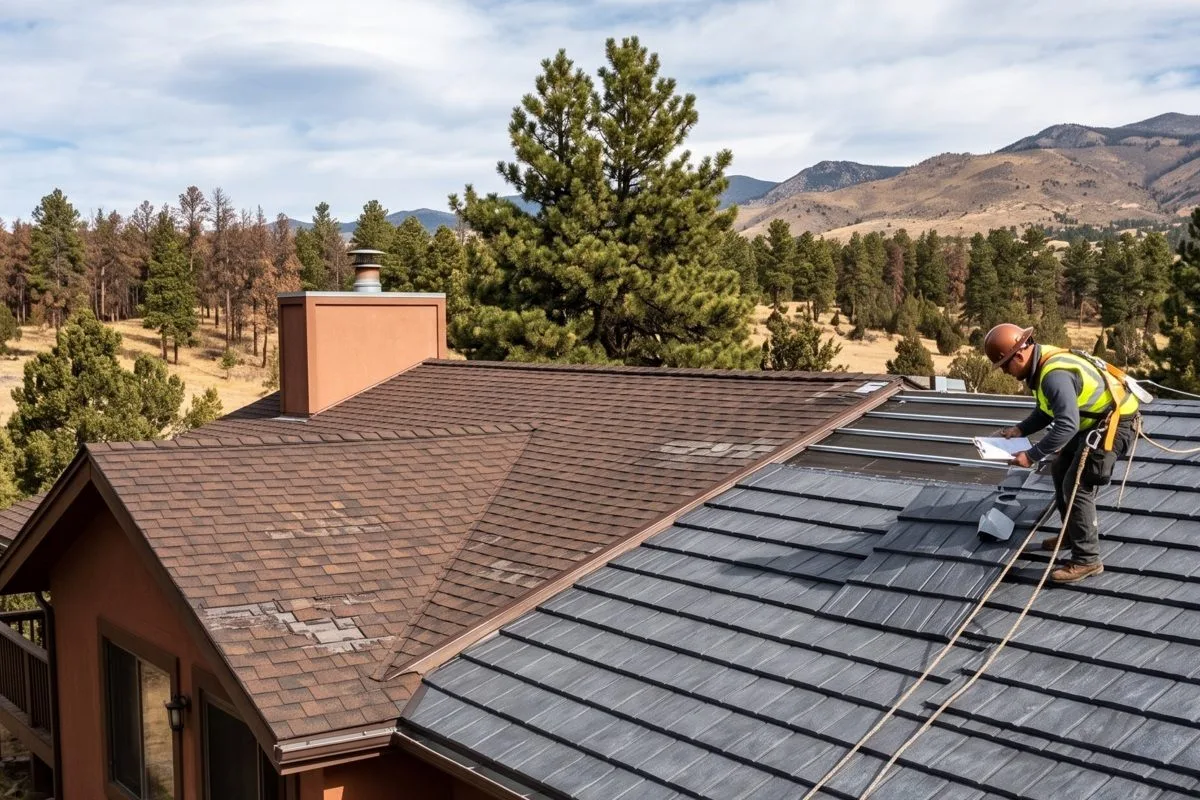
Denver property managers know the spring-and-summer routine: a hailstorm rolls through, and suddenly there are inspections, insurance claims, deductibles, and resident complaints across every building at once. On a multi-family property, that cycle is expensive and disruptive, and it repeats most years. Impact-resistant shingles are one of the few roofing decisions that can break the pattern.
This guide focuses on the financial and operational case: why upgrading to impact-resistant (Class 4) shingles tends to pay off for multi-family roofing in the Denver metro, and what property managers should weigh before specifying them across a portfolio.
What Are Impact-Resistant Shingles, and Why Do They Matter in Denver?
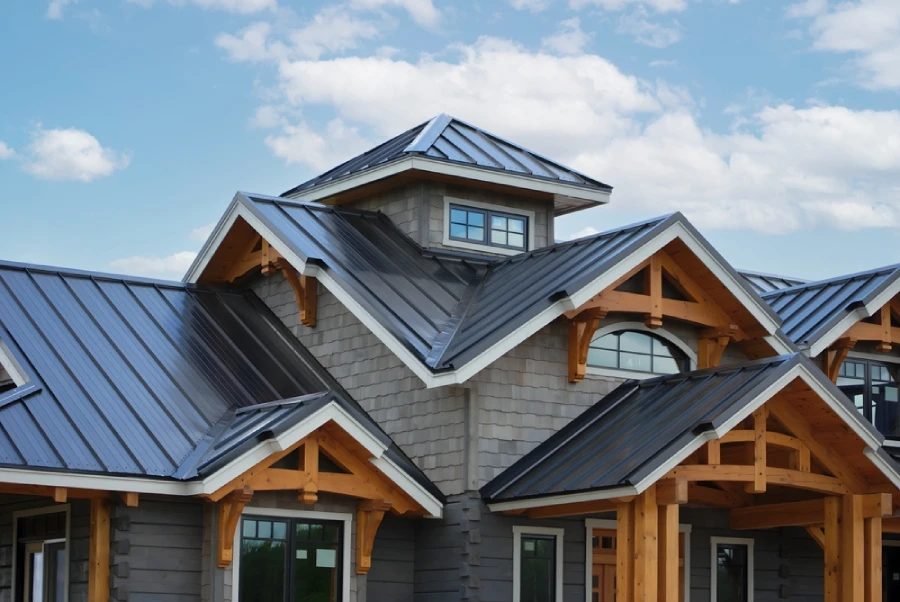
Impact-resistant shingles are asphalt shingles engineered to survive hail that would crack a standard roof. The benchmark is the UL 2218 test: a two-inch steel ball dropped from twenty feet, twice onto the same spot. Shingles that show no cracking, splitting, or fracturing earn the highest rating, Class 4. Products like GAF Timberline ArmorShield II achieve a Class 4 rating with SBS-modified (rubberized) asphalt, which also performs well in Colorado’s cool-weather installations. Synthetic options such as F-Wave shingles reach Class 4 by a different route and are worth comparing on a portfolio spec.
The Front Range sits squarely in “Hail Alley,” and the Denver metro takes repeated, costly hail nearly every season. For a standard roof, that means accelerated aging, granule loss, and eventual claims, often before the roof reaches half its rated life. A Class 4 roof is built to shrug off small-to-medium hail and actually reach its full service life instead of being cut short storm by storm.
Why Does Class 4 Make Financial Sense Across a Portfolio?
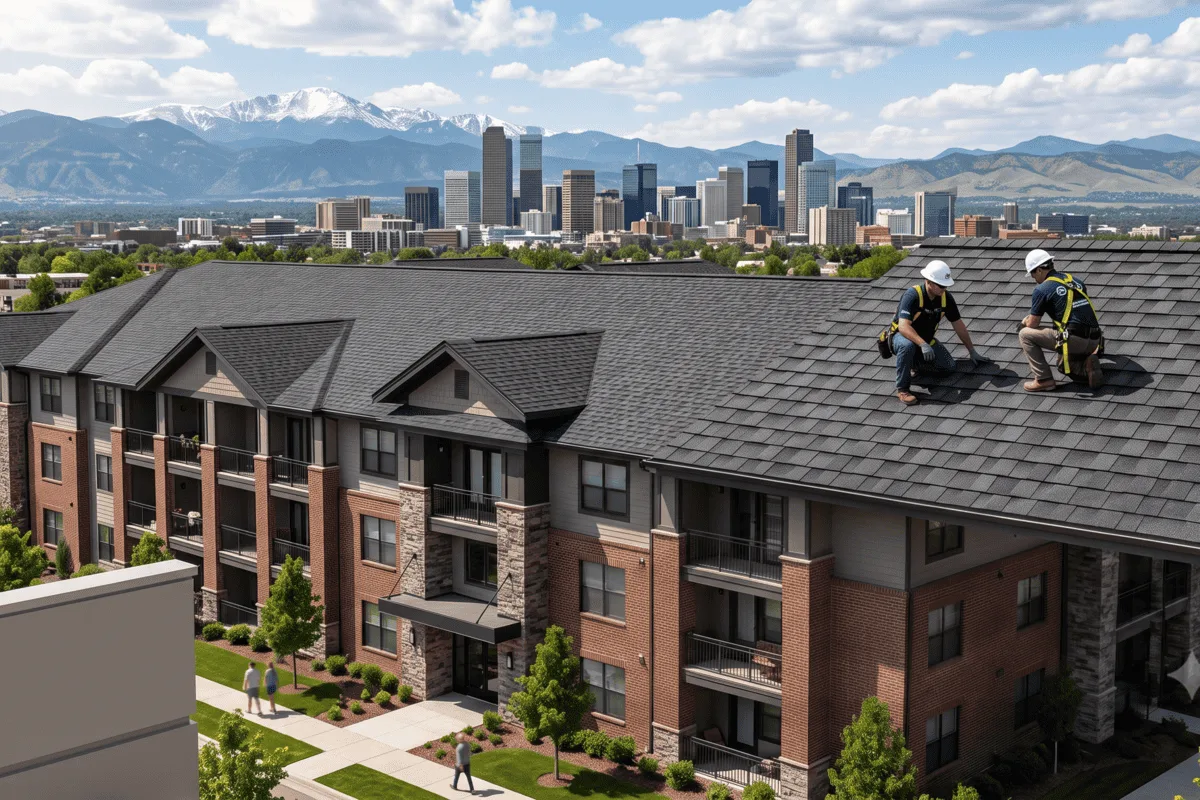
Because the savings and avoided costs multiply across every building. On a single-family home, the math is appealing; on a multi-family property, one Class 4 specification can lower insurance costs, reduce storm claims, and extend roof life across the entire portfolio at once. The payoff shows up on three levers:
- Insurance credits. Colorado’s impact-resistant roofing discount statute and the new SB26-155 grant program both target homeowner policies, not commercial habitational coverage. The underwriting logic still carries over: carriers price hail risk, and a documented Class 4 roof across a portfolio is a credit worth negotiating at renewal. Ask your broker because commercial answers vary far more than homeowner ones.
- Fewer claims and deductibles. Colorado hail deductibles are frequently percentage-based and can run into the thousands per building. Every storm a Class 4 roof shrugs off is a claim, a deductible, and a premium increase potentially avoided.
- Longer, more predictable life. Standard shingles that look fine from the parking lot can still be bruised and shedding granules after a storm, quietly shortening their life. Class 4 shingles resist that cumulative degradation, which makes planning roof replacement cycles across buildings far more predictable.
One honest caveat belongs here: no roof is truly hail-proof, and manufacturers do not warranty shingles against hail. What Class 4 does is materially lower the odds and the frequency of damage, which is exactly where the financial case comes from.
How Does the Payoff Add Up Across a Portfolio?
The exact return depends on your premiums, deductibles, building count, and carrier, so the honest answer is to run the numbers for your specific property. The structure of the payoff, though, is consistent. An upfront material premium like Class 4 shingles costs more than standard ones, but is offset by recurring insurance savings on every building, plus the deductibles and emergency re-roofs that hail would otherwise force. Over a roof’s lifespan and across several buildings, those avoided costs often outweigh the upgrade. A roofing contractor experienced with multi-building work can help model it building by building before you commit.
Do Impact-Resistant Roofs Also Help With Colorado’s Fire Rules?
They can, when you combine the right ratings. Hail isn’t the only code-relevant threat to Front Range and foothill roofs. Wildfire is increasingly part of the conversation, too.
The 2025 Colorado Wildfire Resiliency Code sets fire-resistant standards, including Class A roofing, for new construction and major alterations in Wildland-Urban Interface zones. A full re-roof may trigger it where a repair will not. Impact resistance (UL 2218 Class 4) and fire resistance (Class A) are separate ratings, but many shingle systems carry both, so fire-resistant roofing for Colorado wildfire areas and hail protection can come from the same specification. For multi-family properties near the foothills, it’s worth confirming both boxes are checked before specifying.
What Should Property Managers Plan Before a Multi-Family Re-Roof?
Even the best shingle underperforms without coordination. Multi-family roofing affects residents, parking, access, board approvals, and budgets across several buildings, so the plan matters as much as the product. Before crews arrive, confirm:
- Resident notices, parking restrictions, and staging or delivery areas
- Building access points and clearly marked safety zones
- A clear written scope for each building or phase
- Manufacturer certification and warranty documentation
- Weather-flexible scheduling and a single point of contact for questions
- Coordination with gutters, ventilation, siding, or related exterior work
Phased work keeps disruption manageable and details consistent from one building to the next, which matters more on a large property where a small inconsistency can repeat across many units.
Why Choose GS Exterior Experts for Multi-Family Roofing
GS Exterior Experts helps property managers plan roof replacement with the product guidance, certification, and communication that larger properties demand. As a GAF-certified roofing contractor serving the Greater Denver area, we provide multi-family roofing services in Denver for apartments, condos, townhomes, and HOA-managed properties.
- We help compare Class 4 impact-resistant options, including GAF Timberline ArmorShield II, against your property’s budget and risk.
- We install according to the manufacturer’s specifications, so warranty eligibility and consistency hold across every building.
- We plan phased work to reduce disruption for tenants and residents.
- We document roof conditions so boards and owners understand what they’re approving.
A Denver roofing expert can also coordinate the roof with gutters, ventilation, and other exterior details, so the whole system works together. See how we approach multi-building roofing projects across Denver-area properties.
Ready to Run the Numbers on a Class 4 Roof?
For Denver multi-family properties, impact-resistant shingles are less about chasing a trend and more about steadying a budget, fewer claims, predictable insurance savings, and longer roof life across the portfolio. The right call still depends on your buildings, premiums, and risk.
Contact GS Exterior Experts to evaluate your roofs, compare impact-resistant options, and plan a phased project that fits your property. We can help you weigh the upfront cost against the long-term payoff and coordinate the work with as little disruption to residents as possible.