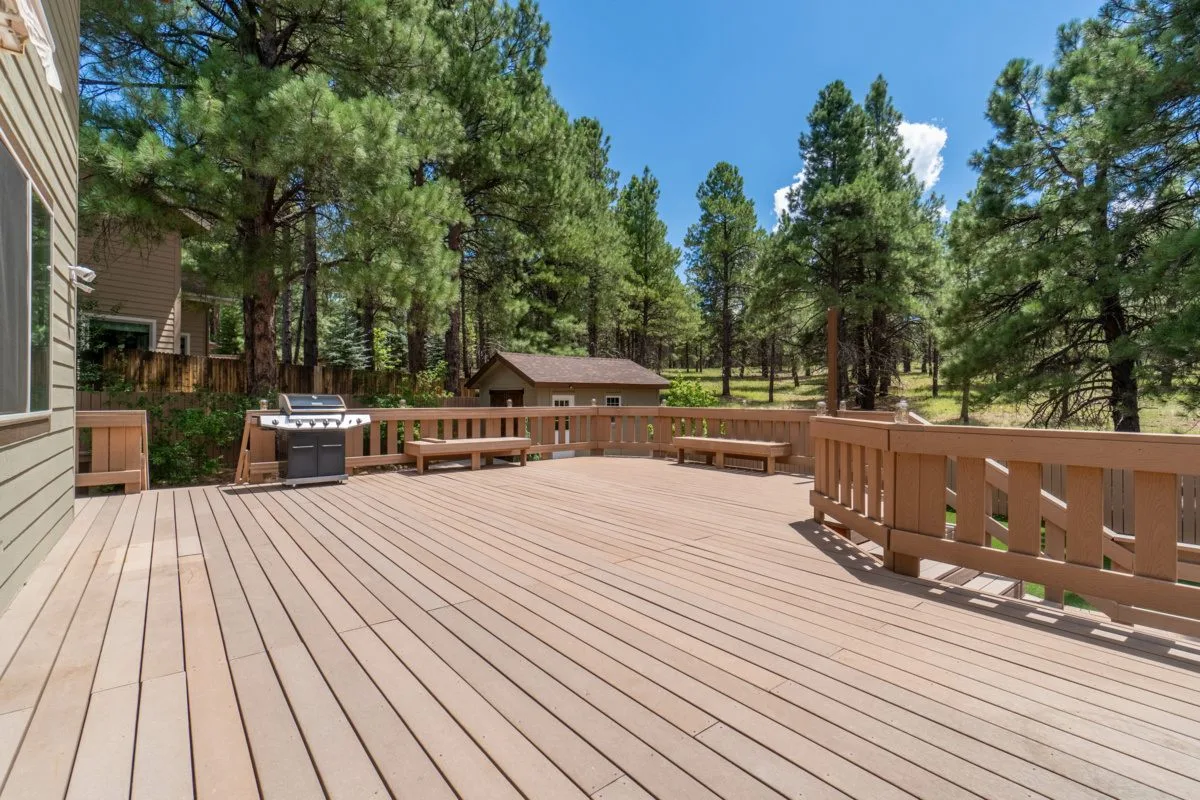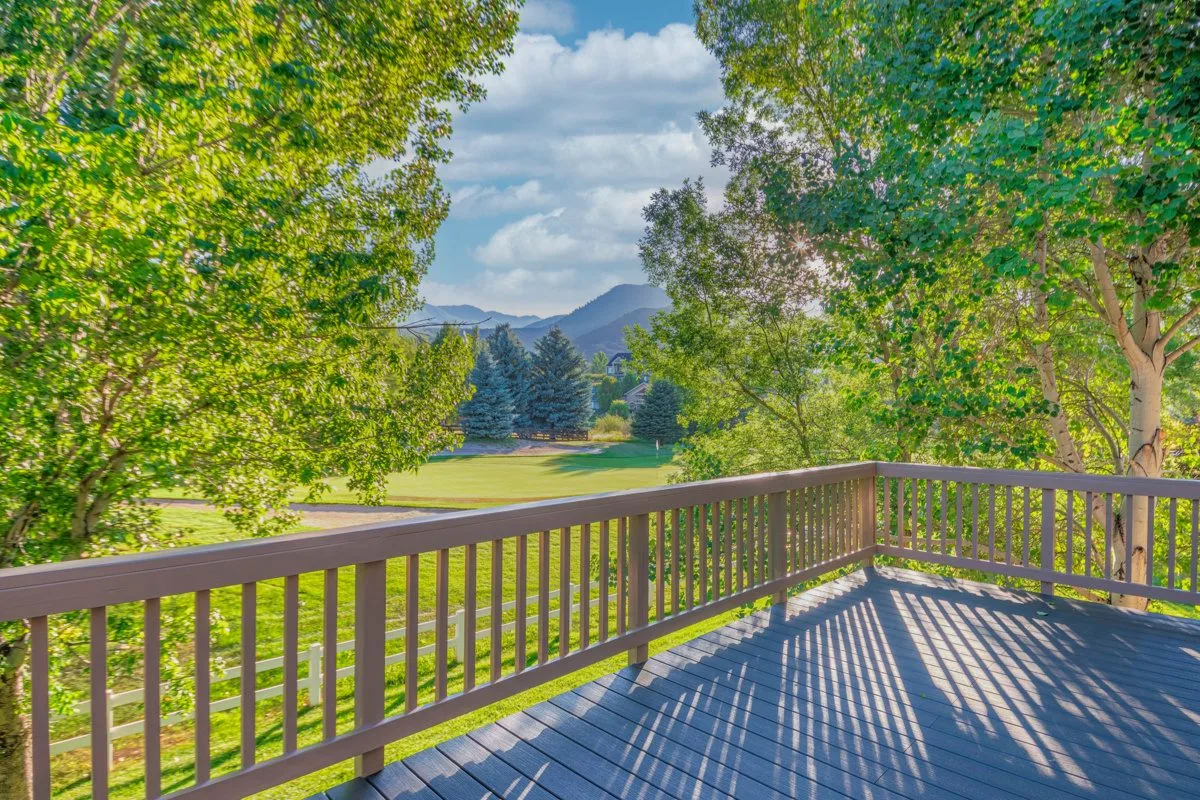

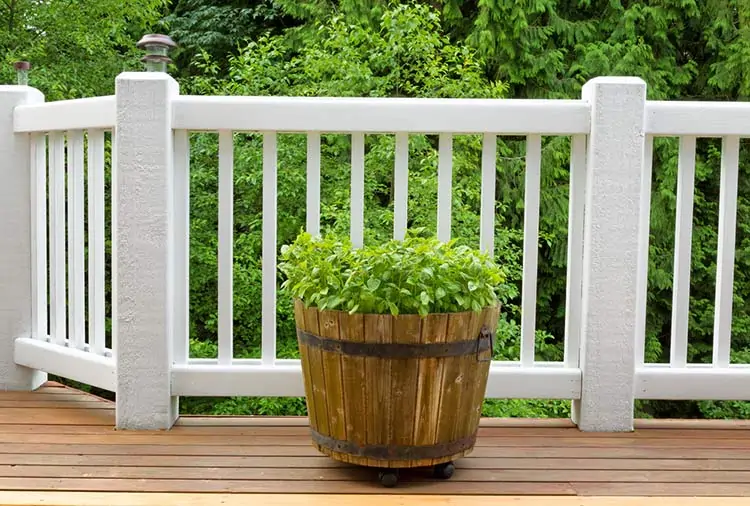
Skirting is the material that closes off the space beneath a raised deck. Most people think of it as a finishing touch, and it is, but it also keeps animals out, hides what you store under there, and in wildfire areas, it affects how your deck performs.
Here are four options, what each one suits, and what to think about before you pick one.
1. Traditional Style: Wood Slat Paneling
For a timeless look that never goes out of style, wood paneling is an ideal skirting idea for a deck. Wood paneling has been a popular choice for its versatility for a long time. It seamlessly blends with various architectural styles. Whether your deck embraces a traditional, farmhouse, or transitional design, wood paneling can add a touch of sophistication.
Three woods come up most often:
- Cedar, which resists decay naturally and weathers to grey if you let it
- Redwood, similar in character and generally the most expensive
- Pressure-treated pine, the budget option, is treated chemically rather than naturally
All three need a maintained finish to last, and skirting weathers faster than the deck above it because it sits closest to the ground and takes splash-back. All three are also combustible.
You can also give your wood paneling an elegant upgrade with the perfect finishing touch. Consider staining or painting the wood in a color that complements your deck’s color scheme.
2. Contemporary Style: Horizontal Metal Panels
Horizontal metal panels suit modern and mountain-contemporary decks, and they are the only option here that is non-combustible. Two materials come up most:
- Aluminum, lightweight, will not rust, and available in a wide range of powder-coated finishes
- Steel, tougher and heavier, though it needs a sound coating since bare steel at a cut edge will rust
Both resist weathering and insect damage, and neither needs painting. At ground level, worth specifying a finish that will survive mower strikes and string trimmers.
Metal panels can also have various finishes and textures. For an understated, elegant vibe, opt for matte or brushed options. If you’re looking to add some sophistication and shine, go for the glossy finish instead.
3. Rustic Style: Natural Stone Skirting
Add a touch of character to your deck with stone skirting. Natural stone skirting offers a wide selection of stones to choose from such as:
- Limestone
- Slate
- Granite
- River rocks
Stone ties a deck to its surroundings better than anything else here, particularly on foothills and mountain properties where it picks up the landscape. It is non-combustible, needs no maintenance, and costs the most of the four options. One practical note: stone skirting is usually built as a veneer over a framed wall rather than stacked, so it needs a footing, and the deck frame has to be set up for it. Easier to plan at the build stage than to add later.
Transform your natural stone skirting into an eye-catching addition to your outdoor space with plants and shrubs. Choose plants that fit both the environment and add a rustic touch – think ornamental grasses or wildflowers.
4. Another Classic Style: Lattice Design
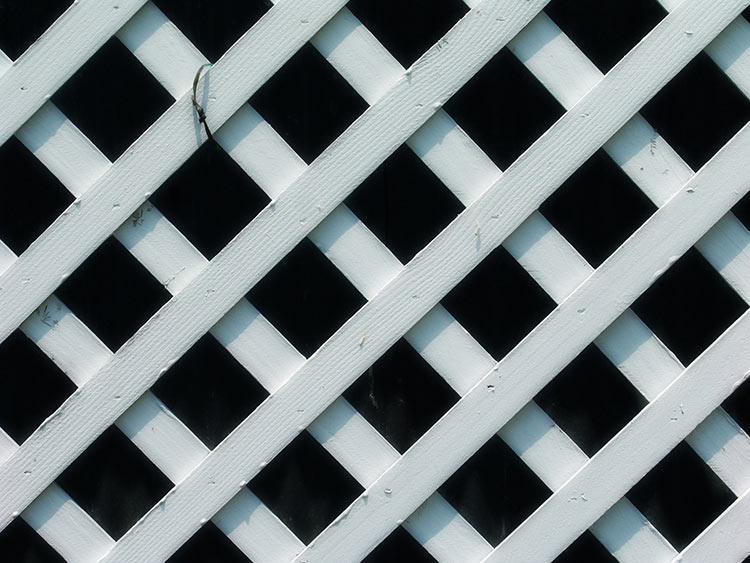
Lattice skirting is a classic choice for a coastal-inspired deck. It consists of crisscrossed strips of wood or plastic, forming a pattern of diamond or square-shaped openings. Lattice panels are available in various sizes and can be customized to match your preferred level of openness. This style of deck skirting is particularly popular in traditional and cottage-style homes.
Lattice panels are available in various materials, including:
- Wood
- Vinyl
- Composite
Each material offers its own set of advantages, such as natural beauty and low maintenance requirements. Lattice gives you airflow, which keeps the space under the deck drier and discourages rot in the framing above it.
The trade-off is that the same openings let embers in during a wildfire, and the space under a deck is exactly where they collect. If your property sits in a WUI area, solid non-combustible skirting is the safer choice, and our guide on making an existing deck fire-resistant covers what else matters.
Planning a Deck or Replacing One?
Skirting is much easier to get right at the build stage than to add afterward, particularly stone, which needs a footing, and solid panels, which need framing behind them. If you are planning a new deck or replacing an existing one, it is worth deciding on skirting before the frame goes up. Contact GS Exterior Experts, and we will talk through what suits your deck, your budget, and your exposure.