
A deck that’s had ten or fifteen Colorado winters behind it starts showing its age, and the tricky part is knowing whether what you’re looking at is cosmetic or structural. One means a weekend of sanding and staining. The other means the deck isn’t safe to stand on.
Here are four signs worth checking for, and a few things you can do to get more years out of the deck you’ve got.
1. Structural Damage
One of the most apparent indicators of structural damage is sagging. This is where the deck appears uneven or slopes in certain areas. Sagging may indicate weakened support beams or improper installation.
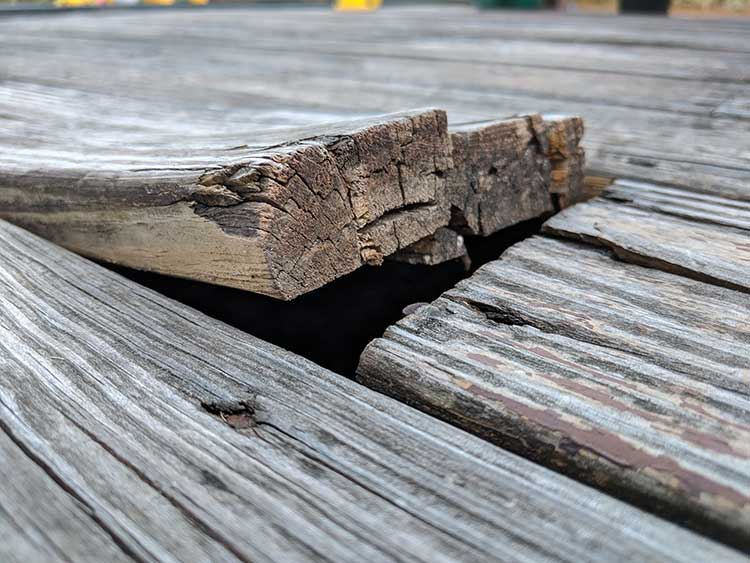
Rotting wood is another red flag that demands immediate attention. Over time, exposure to moisture can lead to wood decay, weakening the overall structure of the deck. Inspect the base of your deck posts, ledger boards, and any other areas prone to moisture. If you notice soft or crumbling wood, it’s an indication that the structural integrity has been compromised.
Loose connections are also cause for concern. Check for wobbly railings, loose screws or nails, and unstable stairs. These issues may point to structural problems that could lead to accidents.
Worth knowing that the ledger board, where the deck attaches to the house, is where most serious deck failures start. If there’s rot there or the flashing has failed, that’s not a repair you should put off.
2. Surface Damage
While surface damage is common and can often be repaired, there are instances where the damage becomes too extensive and irreparable. It’s important to distinguish between everyday wear and tear and major damage that necessitates a deck replacement.
If you spot deep cracks or splintering in your deck boards or railings, then it’s time to take action. This kind of surface damage can compromise the structure’s integrity and create a safety hazard.
When you’re inspecting, factor in the material and the age. Wood decks typically last 10 to 20 years, and at Colorado’s altitude, they tend toward the shorter end because UV breaks down the surface faster. Composite and PVC last considerably longer, which is why most replacements we do go that way.
3. Pest Infestations
Pests such as termites, carpenter ants, or wood-boring beetles can cause significant damage to your deck over time.
Inspect your deck regularly for signs of pest infestations. Look for small holes, tunnels, or sawdust-like residue, which are indicators of termite activity. Carpenter ants leave coarser shavings and tend to go for wood that’s already damp, so if you’re seeing those, check for a moisture problem underneath as well.
4. Wood Decay
Wood decay is often characterized by soft, spongy areas on the deck boards or posts. The wood may appear discolored, have a musty odor, or show signs of fungal growth.
If you encounter these signs, it’s essential to address the issue promptly. Wood decay can spread rapidly and compromise the structural integrity of the deck.
When is the Best Time to Replace a Deck?
Spring and early fall are the practical windows, mainly because temperatures are moderate and you’re less likely to lose days to weather. Late autumn works too if the ground hasn’t frozen yet. Spring and summer are the busiest months for outdoor work, so if you’re planning a spring build, it’s worth getting on a schedule over winter rather than calling in April.

Maintaining and Caring for Your Deck
Keeping your deck in tip-top shape doesn’t have to be difficult. With just a few simple steps, you can ensure that it will remain looking its best for years.
Regular Cleaning
Sweeping off debris and washing with a mild detergent keeps most decks looking respectable. Go easy with a pressure washer, since a high-pressure nozzle held too close will raise the grain on wood and can scar composite boards. If you use one, keep it on a wide fan setting and work from a distance.
Seal and Stain
Sealing or staining protects wood decks from moisture and UV, and in Colorado, that usually means re-doing it every two to three years, sooner on a south-facing deck. Composite and PVC don’t need it at all, which is worth weighing if you’re tired of the cycle.
Annual Maintenance
Inspect your deck annually for any signs of wear, damage, or loose connections. Tighten loose screws or nails, and don’t wait to replace any damaged or rotting boards. Taking a proactive approach will save you from costly repairs down the road.
Not Sure Whether Yours Needs Replacing?
If you’ve spotted one or two of these signs and you’re not sure how serious it is, that’s worth a second opinion before you spend money either way. Sometimes the frame is sound, and it’s just the boards, which is a much smaller job. Have a look at our deck building and replacement services to see what’s involved. Contact GS Exterior Experts and we’ll come out and take a look at what you’ve got.