
Summary:
- Windows made for lower elevations can bow when installed in a mountain home, so the glass package should be specified for the installation altitude.
- Low-e glass can help with fading and summer heat, but the right solar rating depends on which direction each room faces.
- A low whole-window U-factor helps limit winter heat loss; the frame and glass edge affect that rating too.
- GS Exterior Experts helps Colorado homeowners compare these details with wind performance and installation needs before replacing their windows.
Mountain windows have more to handle than a clear view. Changes in elevation can affect insulated glass, while strong sun, cold nights, and wind expose weaknesses in the window and its installation. The most useful high-altitude window features address those conditions as a system.
At GS Exterior Experts, we help Colorado homeowners compare the glass, frame, and installation details that fit their location. These five features give you better questions to ask before ordering replacement windows for a mountain home. No single specification is right for every elevation, wall, or room.
1. Glass Specified for Installation Elevation
Insulated glass units contain an airspace between panes. If a unit is sealed at a lower elevation and installed at a much higher elevation, the pressure difference can bow the glass outward. In some conditions, that stress can damage the glass or edge seal. The relevant question is where the unit will be made and where it will be installed, not whether every window needs the same tube.
Ask How the Manufacturer Handles Pressure
Some manufacturers use a small capillary tube to equalize pressure at higher elevations. Others offer an insulated glass configuration specified for the destination altitude. The manufacturer should confirm the approved method for the exact window, including unit size, glass thickness, shipment, and warranty terms.
An open tube also changes the glass package. Cardinal Glass explains in its technical bulletin on capillary tubes that argon can diffuse through them; it does not sell high-altitude argon-filled units using that approach. Ask for the actual glass-fill specification rather than assuming both an open tube and a retained argon fill.
2. Low-E Glass Matched to Sun Exposure
Low-e coatings can reduce unwanted solar heat and ultraviolet transmission while admitting visible daylight. A south-facing living room with winter sun presents a different choice from a west-facing bedroom that overheats on summer afternoons.
Compare Solar Heat Gain and Daylight
Solar heat gain coefficient (SHGC) shows how much solar heat a window admits; visible transmittance (VT) shows how much daylight passes through. A lower SHGC can help with afternoon overheating, while a higher value may preserve useful winter solar gain in an appropriate south-facing design. Consider shading, room use, and window orientation before selecting one coating for the whole house.
Ask for the coating’s documented UV transmission if fading concerns you. The number varies by glass package, and no coating makes furnishings immune to fading. GS Exterior Experts offers energy-efficient windows with low-e glass and can compare configurations for the home’s exposure.
3. A Low Whole-Window U-Factor
U-factor measures heat transfer through a window; lower numbers indicate better insulation. Compare the certified rating for the complete window, including frame and glass, rather than a center-of-glass number from a brochure. The NFRC window rating guide also explains SHGC, VT, and air leakage, so you can judge a product beyond a single number.
Dual and triple-pane windows can reach different performance levels depending on coatings, spacing, gas or air fill, and frame. A warm-edge spacer may improve edge-of-glass temperature, but no spacer guarantees a condensation-free window. Interior humidity, outside temperature, and air circulation still matter. If you are weighing which replacement windows suit Colorado conditions, compare whole-unit ratings for the products actually available at your elevation.
4. A Frame That Fits the Exposure
Cold, sun, moisture, and temperature changes affect frames differently. The choice involves appearance, maintenance, structural requirements, price, and the window size. A brand name or one material category does not settle all of those questions.
For example, fiberglass offers dimensional stability and a painted look; vinyl offers lower-maintenance options at different price points; clad wood gives an interior wood finish with exterior protection. Aluminum frames should be assessed for their thermal break and complete-window U-factor. None is immune to poor installation or an unsuitable opening detail. A comparison of window frame materials for Colorado can narrow the options before you choose a product line.
5. Tested Wind and Water Performance
On an exposed ridge or open valley, look beyond glass thickness. Operable sashes, locks, weatherstripping, frame joints, and installation flashing all affect how the window handles air and water. A multi-point lock can help close some large sashes tightly, but it is not a feature every window needs.
Ask for the product’s tested structural, air, and water performance and the design pressures appropriate to the house. A universal “DP 40” rule cannot substitute for site-specific design. The rating should match the size and configuration you plan to install, and the opening preparation and flashing steps matter once that unit meets the wall.
How to Compare High Altitude Window Features
Product or window labels become easier to compare when you ask for answers tied to your address and the exact model:
- Is this insulated glass package approved for the installation elevation, and what fill does it use?
- What are the complete window’s U-factor, SHGC, and VT for the quoted configuration?
- Which rooms need more solar control, and which benefit from winter sun?
- How do the frame, sash, and weatherstripping perform in the chosen size and exposure?
- What are the tested air, water, and structural ratings, and how will the opening be flashed?
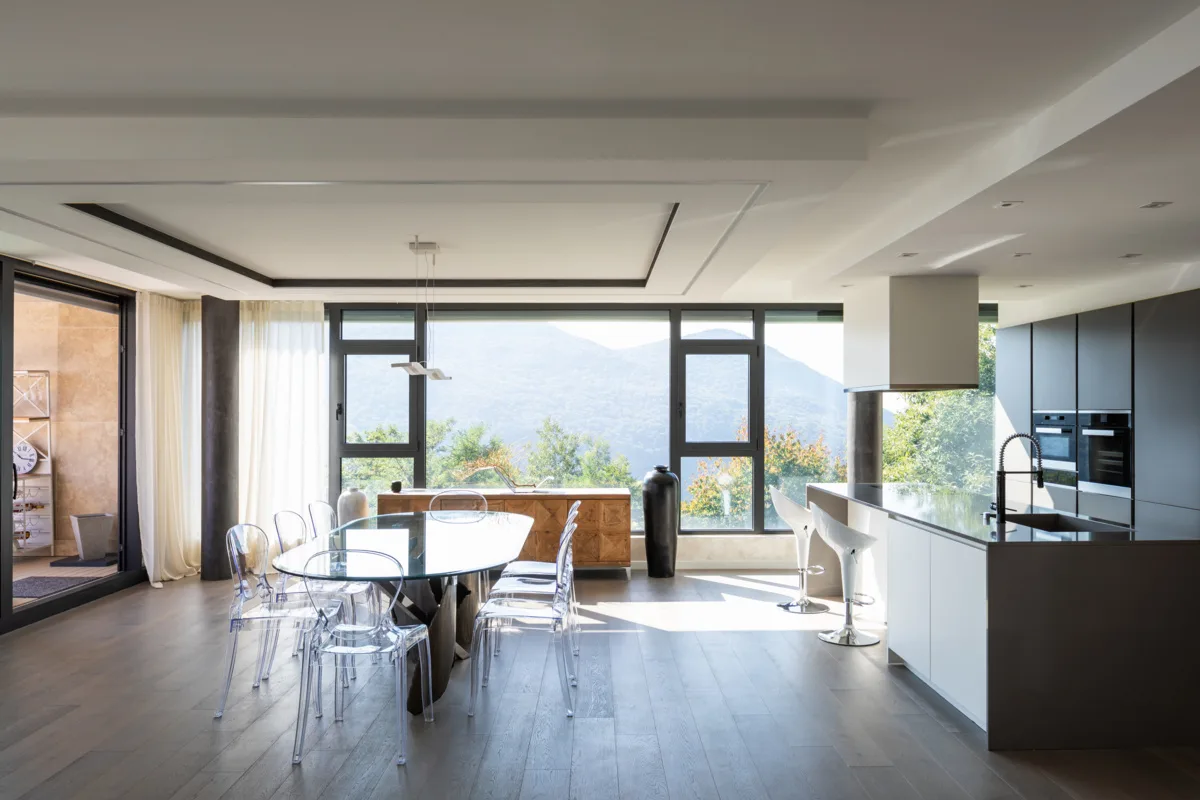
The right answers may differ between a sheltered bedroom and a large west-facing window overlooking a mountain valley.
Start With the Rooms That Give You Trouble
A window that fogs between panes calls for a different conversation than a room that overheats every afternoon. Note the symptom, the wall it faces, and the elevation of your home. Those details will do more to shape the glass and frame selection than a generic list of premium upgrades.
Contact GS Exterior Experts today to discuss the rooms that feel drafty, overheat, or show moisture between the panes. Tell us your home’s elevation and which windows face the strongest sun or wind. We’ll use those details to help you choose high-altitude window features that fit each opening.