
Summary:
- An existing lawful deck generally does not need removal solely because the wildfire code changed.
- A permitted new deck or covered modification in a mapped WUI area may face new construction requirements.
- Qualifying decking options extend beyond Class A boards; the applicable fire intensity classification matters.
- Insurance requests and local building code requirements are separate decisions.
Colorado’s wildfire code does not generally force a deck replacement just because an older deck is made of wood. The answer changes when you plan new construction or substantial work on a property within a mapped wildland-urban interface (WUI) area. The project scope and local rules determine what must meet current standards.
At GS Exterior Experts, we plan new and replacement decks around site conditions and applicable rules. Confirm your parcel’s classification and the proposed scope before choosing materials.
Does the Code Require an Existing Deck to Go?
The Colorado Wildfire Resiliency Code generally permits an existing lawful condition to continue under Section 102.8. The rule has exceptions, including conditions addressed elsewhere in the code and those a code official finds necessary to correct for safety. It is more precise to say an existing deck may remain than to promise permanent grandfathering.
Check the Property and the Proposed Work
WUI status alone does not mean a building inspector will order a deck removed. A new deck, a full replacement, or other exterior work can bring the proposed scope under current rules. The code exempts exterior alterations affecting less than 25 percent of a structure, which is where the percentage figure people repeat comes from, though it governs the structure rather than the joists in your deck. The same code covers windows and doors on the same logic.
The permit authority interprets the code and local amendments. Boulder’s WUI guidance limits its requirements to permitted work: a deck replacement does not automatically require an overhaul of the house.
Ask Before Finalizing the Scope
Tell the building department whether you are changing boards, replacing framing, enlarging the footprint, or adding a roof. Seek an answer tied to your address and plans, since permit and wildfire requirements can differ by scope.
The Colorado Municipal League’s code update describes statewide adoption. Local amendments and earlier WUI rules may also apply.
What Makes a New WUI Deck Code Compliant?
The answer depends on the mapped fire intensity classification and local adoption. The state code’s Class 2 provisions address the walking surface of unenclosed decks in moderate or high hazard WUI areas. Material labels alone are not enough; officials review the documented product and proposed assembly.
Deck Boards Have More Than One Permitted Path
Section 404.5 lists approved noncombustible materials, Class A-rated materials, exterior-rated fire-retardant-treated wood meeting its referenced standard, and qualifying ignition-resistant materials. It also provides an exception for composite decking with at least a Class B rating. Consequently, neither all wood nor all composite products can be judged by category alone.
Our Colorado deck replacement options include TimberTech Advanced PVC. Verify the exact product’s fire documentation and its acceptance for the proposed application.
Framing and the Space Beneath Need Separate Review
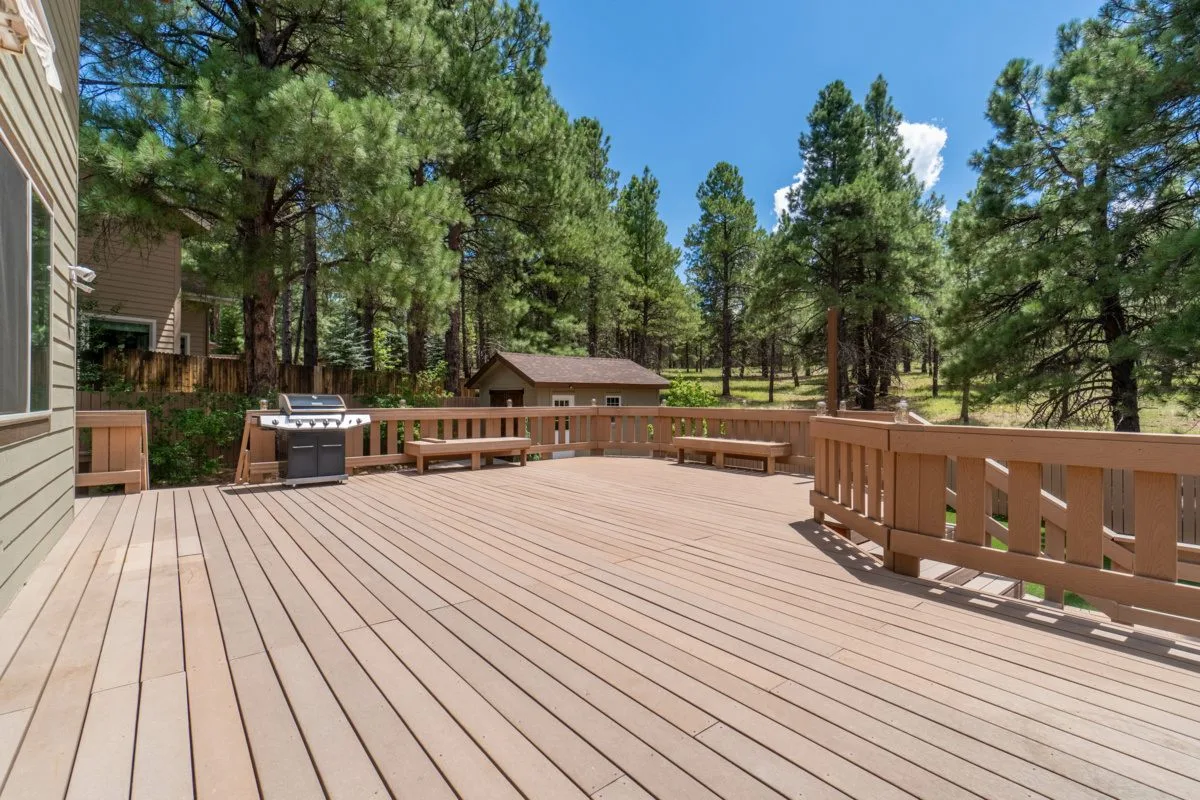
The state rule for an unenclosed deck walking surface does not impose a blanket requirement for steel joists or aluminum ledgers on every deck. Some covered decks, enclosing walls, underfloor conditions, or local amendments can raise other questions. A sound wood frame is worth evaluating before you assume it has to go, though structural capacity, joist spacing, connections, and permit scope all decide whether it can stay. That evaluation is where our residential deck builds usually start.
The same state code calls the area within five feet of a structure Structure Ignition Zone 1, or the immediate zone. It addresses hard surfaces and combustible vegetation near structures, decks, stairs, and attachments. Clear pine needles, wood mulch, and stored combustibles from beneath and beside a deck; ask the local official how site requirements apply to an existing property. Screening can be considered in some designs, but a universal 1/8-inch mesh enclosure requirement for every open deck is not in the deck-surface provision.
Can Insurance Require a Change to the Code?
An insurer can assess wildfire exposure when underwriting or renewing a policy. It may request vegetation cleanup, a change to stored materials, or other risk reductions. Whether it asks for changes to a particular deck depends on the carrier’s inspection, policy, and property. A building permit does not determine your insurance terms, and an insurer’s request does not establish a violation of the building code.
If you receive a notice, ask the carrier exactly what condition concerns it, what action it will accept, and when a response is due. Obtain the request in writing. An insurance agent can explain the coverage and renewal options; a local building official can explain code obligations. A full deck replacement should follow the actual condition and requirements, not an assumption about either organization’s rules.
What Can You Improve Without Replacing the Deck?
A sound deck still benefits from fuel reduction while you weigh a larger project. It helps to know what actually makes a deck a wildfire risk before deciding how far to go:
- Remove dry leaves and needles from board gaps, corners, and the space below.
- Move firewood, loose lumber, and other combustibles away from the house and deck.
- Replace combustible mulch near the deck with suitable hardscape where appropriate.
- Document loose railings, soft boards, or suspect framing for a qualified assessment.
These steps do not certify a deck as code-compliant or fix structural defects. Our article on reducing ignition risks around an existing deck explores additional options, but GS Exterior Experts’ deck service focuses on new construction and replacement rather than stand-alone repairs.
Colorado Deck Compliance Pathways
The next step follows the deck’s condition, the proposed project, and any written notice from an insurer or building department.
| Situation | Likely question | Is replacement automatic? | Next step |
| Existing lawful wood deck, unchanged | Does a safety or site requirement apply? | Generally no | Maintain the deck and confirm local rules if notified |
| Limited modification | Is the work exempt or permit reviewed? | No universal answer | Describe the exact scope to the local official |
| Full replacement or new deck in mapped WUI | What classification and product rules apply? | The project already involves new work | Design to current applicable requirements |
| Insurance concern | What specific condition must change? | Not necessarily | Ask the carrier for its written request |
If a deck has widespread rot, failing footings, or unsafe railings, its condition can independently justify replacement even where a wildfire rule does not require it.
Plan the Right Deck Project for Your Property
If your existing deck is sound and you have no project planned, a code change alone usually does not put demolition on your calendar. A written insurance request, unsafe framing, or a planned rebuild creates a different decision. Start with the notice or the work you actually intend to do, then confirm the requirements for your address.
Contact GS Exterior Experts for your project goals and any guidance you received from the building department or insurer. We’ll evaluate the existing structure if you are considering a new deck and show you which materials fit the proposed build. You can then decide whether deck replacement belongs in your plans at all.