
Hardie board comes up in almost every siding conversation in Colorado, usually alongside the observation that it costs more than the alternatives. Both things are true.
Here’s what it is, why it’s specified so often, and where it genuinely costs you something.
What is Hardie Board? What is it used for?
Hardie Board is a durable siding product from the James Hardie company, and is a fiber cement siding that is made from a mix of cement, sand, and cellulose fibers. It is one of the most popular brands of fiber cement siding on the market and is known for its durability and long-lasting performance.
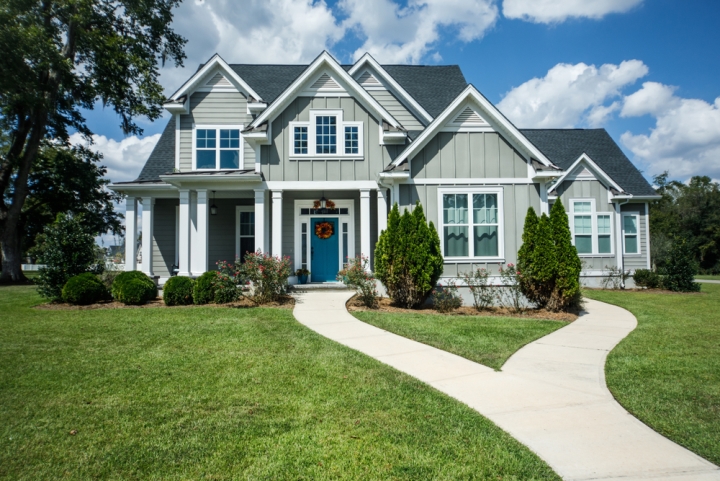
It goes on homes and commercial buildings alike, in a wide range of colors and profiles. It costs more than wood or vinyl, and what you get for that is a 30-year non-prorated substrate warranty and a board that won’t rot, warp, or burn.
What are the pros and cons of Hardie Board?
When it comes to James Hardie siding, there are more pros than cons. But it’s important to know what you’re getting yourself into when you choose this material.
Here are all the pros and cons that you need to know when you ask yourself, What is Hardie Board siding?
Pro: Durability
Fiber cement doesn’t absorb water the way wood does, so it won’t rot, and freeze-thaw cycling has far less to work with. It’s also classified as non-combustible under ASTM E136, and termites have no interest in it.
It handles wind well, which is why it turns up in storm-exposed markets. Worth knowing that severe hail can still chip or crack it, as it damages any cladding, so “durable” doesn’t mean untouchable.
Pro: Maintenance
With a factory-applied ColorPlus® finish, there’s no repaint cycle, and the finish carries a 15-year warranty against peeling, cracking, and chipping. A wash with a garden hose once or twice a year is usually all it asks.
Field-painted Hardie is different: it needs repainting eventually, and primed board has to be painted within 180 days of installation.
Pro: Aesthetics
Another advantage of Hardie Board siding is its attractiveness. It comes in a variety of colors and styles, so it is easy to find an option that complements the look of your home.
Con: Cost
One of the biggest disadvantages of Hardie Board siding is its cost. It is one of the more expensive types of siding available, though you will likely recoup your initial investment because of how durable and long-lasting Hardie Board is.
Con: Installation
Hardie Board can be difficult to install, so it is important to make sure that you have someone who is experienced in doing so. And, because of its difficult installation process, it can be tough to find contractors who are experienced in installing it.
Is Hardie Board the same as cement board?
People use these terms interchangeably, and it causes confusion, so here’s the distinction.
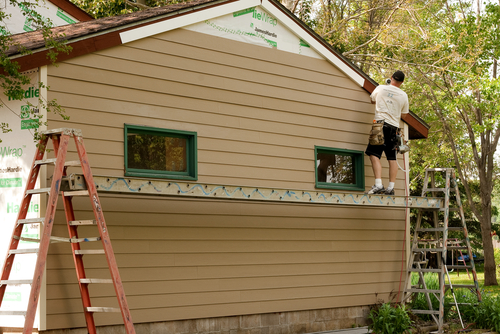
“Cement board” is the general category: any sheet product made from cement and reinforcing fibre. Hardie board is James Hardie’s exterior siding, which falls in that category. HardieBacker® is a different James Hardie product entirely, a backer board used under tile on floors, walls, and countertops.
The short version: if you’re siding a house, you want Hardie siding. If you’re tiling a bathroom, you want a backer board. Neither is structural, and neither carries a load.
How long does Hardie Plank last?
First of all, what is Hardie Plank? Hardie Plank is a type of siding made from fiber cement. It is designed to mimic the look of wood but is more durable and weather-resistant.
HardiePlank is backed by a 30-year non-prorated substrate warranty, and in practice, it typically outlasts that in Colorado conditions. How long it depends on exposure and whether the finish is maintained. The finish usually needs attention before the board does, which is why ColorPlus and its 15-year finish warranty are worth the premium over primed board.
So, Is It Right for Your House?
If you’re staying put and you want something you won’t think about again for decades, Hardie is usually the answer. If you’re on a tight budget or planning to sell within a few years, engineered wood gets you most of the way for less. Contact GS Exterior Experts, and we’ll price both so you can see the gap for your own house.