
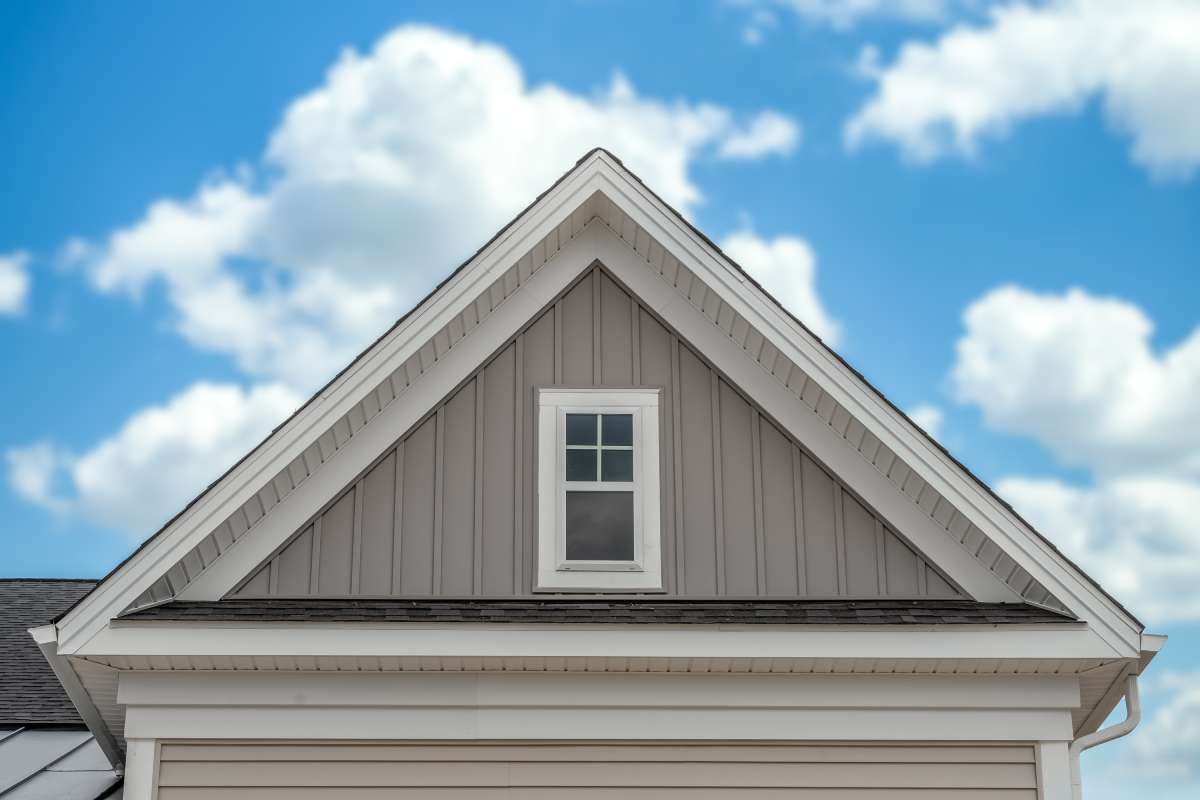
Vertical siding draws the eye upward, which makes a single-story home look taller, and a tall elevation look more deliberate. Compared to horizontal siding, it reads as more contemporary, and it suits the mountain-modern style that has taken hold across the Front Range.
Here’s what it comes in, what each material costs you, and which profiles work on which elevations.
The Profiles
Board and batten, channel groove, and panel with trim are the three common vertical profiles. Board and batten is the one most people picture: wide boards with narrow battens over the joints. Each of these is available in more than one material, which is the decision that actually matters.
Board and Batten Materials
The beauty of board and batten lies in its adaptability. You can choose from:
- Wood: the real thing, with the grain and the smell. Needs re-staining every three to seven years at altitude, and it’s combustible.
- Vinyl: the cheapest route to the look. Fades faster at altitude and becomes brittle in cold.
- Engineered wood: LP SmartSide is the common choice, treated against rot and termites, lighter than fiber cement. Still wood-based, so still combustible.
- Fiber cement: non-combustible under ASTM E136, no repaint cycle with a factory finish, and the most expensive of the four.
1. Fiber Cement Siding
Fiber cement is what we install most on vertical work in Colorado, usually HardiePanel with battens over the joints.
It’s classified as non-combustible under ASTM E136, won’t rot, and stays dimensionally stable through freeze-thaw rather than opening at the joints. James Hardie backs the substrate with a 30-year non-prorated warranty, and the ColorPlus® finish for 15 years.
The trade-offs are cost and weight. It runs more per square foot than the alternatives here, and the panels are heavy enough that installation takes longer.
2. Vertical Metal Siding
Vertical metal suits minimalist and mountain-modern elevations, and the long uninterrupted line is most of its appeal. Standing seam and corrugated are the two common profiles.
It’s non-combustible, won’t rot or warp, and needs nothing beyond an occasional wash. Finish is what determines how long it looks right, so ask about PVDF coatings, which carry the longest fade warranties.
The trade-off is hail. Metal panels dent, which is cosmetic rather than a failure, though on a large flat elevation, that’s a lot of visible surface. Heavier gauges and profiled finishes handle it considerably better than thin flat panels.
3. Vertical Vinyl Siding
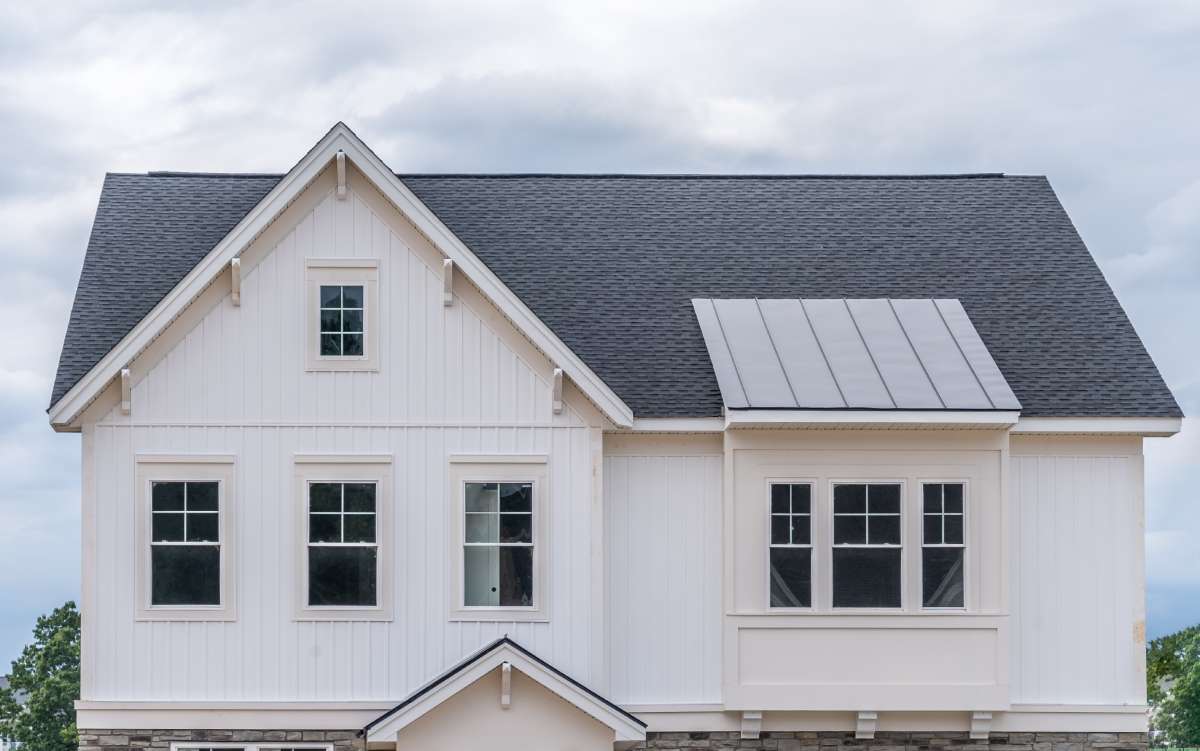
Vinyl is the least expensive way to get a vertical look. The color runs through the panel, so it never needs painting, and a wash once or twice a year is all it asks. It comes in board and batten, shake, and scallop profiles, so the design range is wider than people expect.
Two Colorado caveats. Vinyl fades faster at altitude than at sea level, and it becomes brittle in deep cold, so a hard impact in January is more likely to crack a panel. Heavier gauges handle both better than economy grades.
4. Engineered Wood
Engineered wood gives you real wood texture at a lower price than fiber cement, and it’s the most commonly installed board and batten product we see in Colorado.
LP SmartSide is treated to the core through the SmartGuard® process rather than surface-coated, so the protection doesn’t stop at the first cut. It carries a 5/50 limited warranty that includes hail coverage up to 1.75 inches, which very few cladding warranties do. With Diamond Kote it comes prefinished with a 30-year no-fade warranty and no repaint cycle.
It’s also lighter and faster to install than fiber cement, which shows up in labor costs. The trade-off is that it’s a wood-based product and therefore combustible. If your property sits in a designated wildfire area, that may rule it out before anything else is considered.
Which One Suits Your House?
Roughly in price order: vinyl costs least and compromises most at altitude, engineered wood sits in the middle, and fiber cement and metal cost the most and last longest. Whether the premium pays back depends on how long you’re staying.
One Colorado note worth adding: if your property sits in a mapped wildfire area, the code may rule out the wood-based options before cost enters the conversation. Contact GS Exterior Experts, and we’ll bring samples out so you can see the profiles at full size against your house.