
Siding style is a separate decision from siding material, and the two often get confused. This article covers the five most common profiles: what each looks like, roughly what it costs relative to the others, and what it asks of you in maintenance.
Any of them can be had in vinyl, fiber cement, engineered wood, or real wood, so the profile decision is mostly aesthetic and the material decision is where performance lives.
1. Lap Siding
One of the most popular types of house siding is lap siding. Lap siding can use materials such as:
- Vinyl siding
- Wood siding
- Composite siding
- Fiber cement siding.
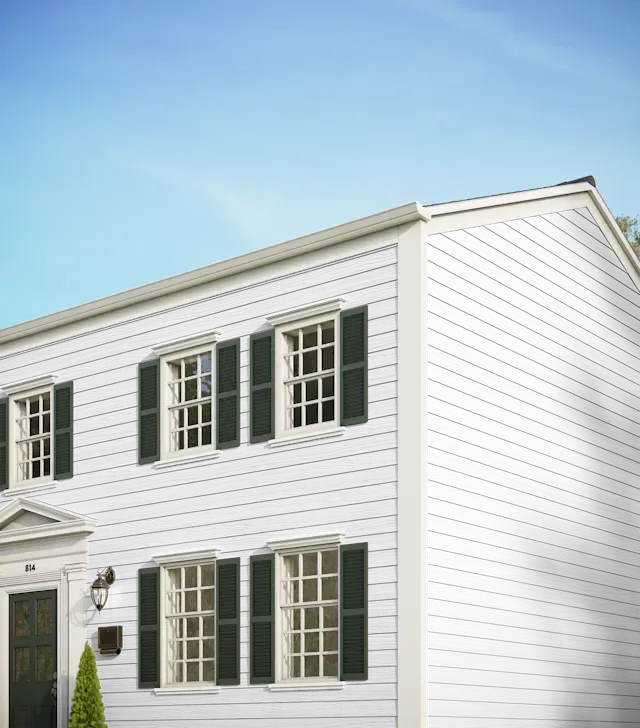
Also called clapboard siding, this style of siding is made up of long pieces placed horizontally. Installing lap siding involves blind nailing or nailing the bottom of each panel to the top of the panel below it. Lap siding comes in various widths and the most common exposure of lap siding is 7”.
Lap siding is an attractive solution for traditional-style homes, especially for mainly symmetrical structures. Among the many siding styles, lap siding is one of the most cost-effective. However, the cost does depend on the materials and colors used, as well as whether it is insulated.
Lap Siding Variations
A variation on lap siding worth noting is Dutch lap siding. Unlike regular lap siding, Dutch lap is not flat but has a notch that makes for an elegant shadow line
Another style of lap siding is shiplap These have tightly interlocking pieces that give different shadow lines. These types are slightly more expensive than ordinary lap siding, but many people choose it for its more distinctive look.
For lap siding, we most often specify James Hardie and the Artisan line where a deeper shadow line is wanted. Artisan is 5/8 inch thick, roughly double standard lap, which is what allows the mitered corners and the deeper profile. Like all Hardie fiber cement, it is classified as non-combustible under ASTM E136.
2. Board and Batten Siding or Panel Siding
Board and batten siding is available in wood, fiber cement, and composite materials. If you see a home with some or all of its siding placed vertically, it likely features board and batten siding.
This style of siding requires the installer to nail each piece from top to bottom, flush against the piece beside it, and flat against the home’s exterior. Then, a thin piece of board called a batten is nailed where the siding pieces meet to ensure a watertight fit. The most common board and batten spacing is 12”, 16”, and 24”.
One advantage of board and batten is versatility, since it combines well with lap siding on gables and accent walls. It does cost more than a lap, mostly because of the extra battens and the labor to set them out evenly across an elevation. That’s why many people use a combination of the two.
3. Shingle Siding
Shingle siding offers an upscale look to any home. This siding is usually made of wood, fiber cement, and composite materials. The shingles are composed of pieces cut into uniform shapes for an even and sophisticated finish.
This type of siding is more expensive than either lap siding or board and batten. Yet, many people prefer its elegant appearance. Wood shingles need re-staining every few years, sooner on south and west elevations at altitude. Fiber cement and composite shingles give a similar look without that cycle, which is why most of what we install in this profile is HardieShingle rather than cedar.

For many homeowners, the look justifies the upkeep, and for others, the manufactured version is the better answer. With contrasting colors of trim and richly colored shingles, you can create an attractive exterior that will stand out from the rest.
4. Siding with Shakes
Shake siding is comparable to shingle siding in price and materials. One main difference is that shakes are thicker and more durable than shingles. They are also less uniform, giving your home a less polished or more rustic look.
Whether you choose shakes or shingles, you can give your home a one-of-a-kind appearance by combining it with other siding types such as board and batten.
5. Channel Siding
Channel siding, also known as channel gap siding, is a versatile and stylish way to add flair to your home’s exterior. While this style can be more expensive than other options, it has many benefits. It can be installed vertically or diagonally for an eye-catching design. The overlapping boards create grooves of varying width and depth, so the same profile can read very differently depending on how it is cut and spaced.
Channel gap siding works well on contemporary or rustic-style homes, depending on how the boards are cut. Channel siding is typically installed with a ventilation gap behind it, which lets the wall assembly dry and reduces the risk of trapped moisture.
For a similar look in fiber cement, we install the Artisan channel profile.
Which Style Should You Choose?
The practical differences between these profiles are smaller than most people expect. All five perform similarly in the same material, so the honest questions are about cost, upkeep, and what you want the house to look like.
How much maintenance are you prepared to take on? What look are you after? Is the extra style worth the higher price?
Once you have answered those, the material decision is the one that determines performance, and that is where wildfire exposure, hail, and warranty terms come in.
See our siding options, or get in touch, and we will bring samples out so you can see the profiles at full size against your house.