
Shutters finish a facade in a way few other details do, and on vinyl siding, they go on differently than they would on wood or fiber cement.
The reason is movement. Vinyl expands and contracts with temperature, considerably more than most cladding, so anything fixed to it has to allow for that. Fasten a shutter tight and you’ll get buckled panels by the first summer.
Here’s how it’s done properly, and what to watch for before you start.
The Tools and Materials You Will Need
There are a few tools and materials that you will need to install shutters on vinyl siding. These include
- Tape measure
- Drill with a bit matched to your fastener size, usually 1/4 inch
- Level
- Pencil
- Shutter-lok fasteners or screws with weatherproof washers, sized for your shutters
- Shutters
That’s the whole kit. If you’re surprised there’s no stud finder or caulk on the list, that’s the point: shutters on vinyl hang off the siding, not through it into the framing.
Choosing Shutters for Vinyl Siding
Vinyl or composite shutters are the usual choice on vinyl siding. They’re light, they move at a similar rate to the siding with temperature, and they need no finishing. Wood shutters can be used, though they’re heavier and need repainting, which is a lot of upkeep for a decorative element.
Size matters more than material. Shutters should match the height of the window opening, excluding the sill, and the pair together should look like they’d cover the window if they closed. Shutters that are obviously too small for the opening are the most common mistake, and they’re more noticeable than no shutters at all.
Prepping the Vinyl for Shutters Installation
Wash the area first with mild detergent and let it dry. Shutters sit against the siding for decades, and anything trapped behind them stays there.
Check the panels where the shutters will land while you’re at it. If any are cracked, loose, or oil-canned, sort that before the shutters go on, since you won’t easily get to them afterward. If the vinyl itself is at the end of its life, it’s worth doing that first rather than fitting shutters to siding you’ll be replacing.
Where the Fasteners Go
Two things decide whether this holds up. Land on the flat, not the lap. Each siding panel has a flat face and a lap where it overlaps the course below. Fasteners should go through the flat part of a panel, not through the lap or the nail hem at the top, which is what holds the panel to the wall.
Leave the hole oversized. Drill a hole slightly larger than the fastener shank so the siding can still slide as it expands and contracts. The shutter is held by the fastener head, not clamped to the wall. Fasten it tight and you’ll see the panels buckle on the first hot day.
How to Attach Shutters to Vinyl Siding
Now that you know what you need, it’s time to start!
1. Remove the Old Shutters
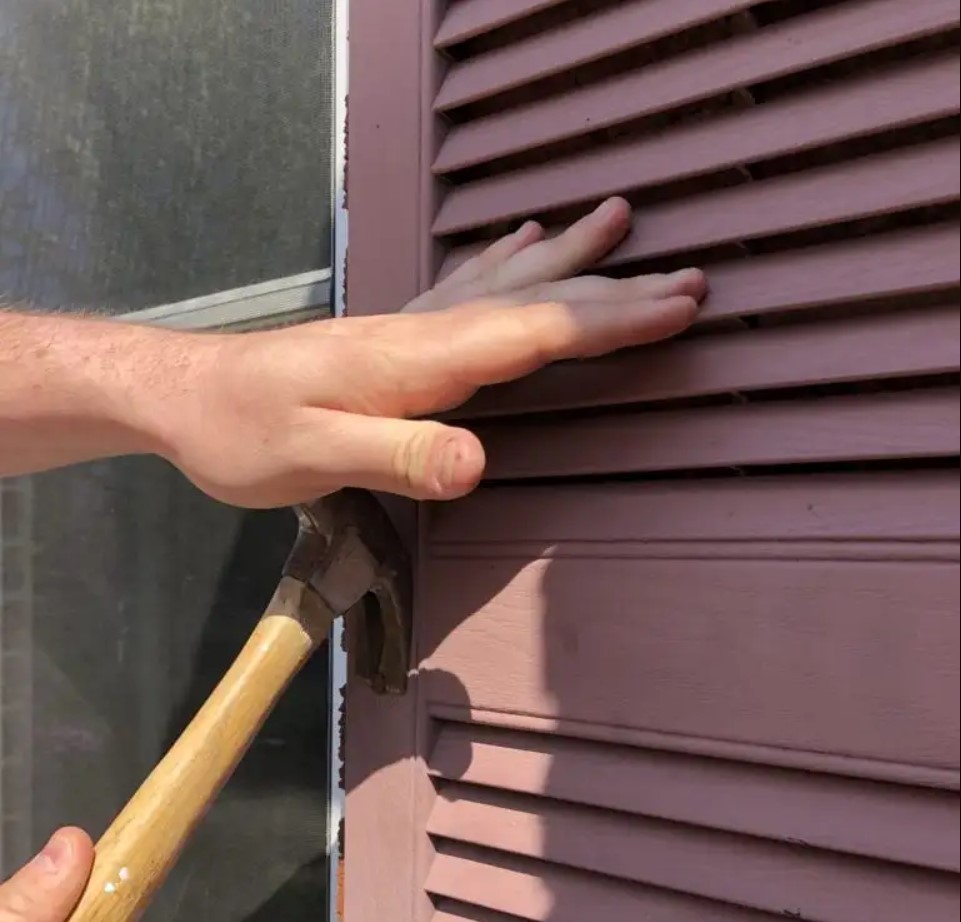
Start by deciding how to hang their shutters onto their windows. The first step is to locate where the old ones are attached and whether they are wood or metal, nailed or screwed in place. If the shutters are wooden or metal, they will typically be held up with screws inserted into the building structure. It’s best to use a cordless drill to remove them one by one so as not to damage the surface of whatever you’re drilling on. Alternatively, if the shutters are vinyl plastic and have locking devices on them (like locks), you should use a hacksaw alone to trim out any nail spikes between windows and shutters carefully.
2. Measure the Window Size
Before purchasing new shutters, measure the windows to ensure that you have bought the right window shutter size. Use a ruler or tape measure to do this. The shutter height is the same size as that of the window opening, excluding the sill. If you’re buying shutters for a space between two windows in your home, ensure the shutters will fit without overlapping by measuring the distance from one window to the other.
3. Mark the Fastener Positions
Hold the shutter in place against the window and check it with a level. Leave about a quarter inch between the shutter and the window casing so both can move. Mark through the shutter’s existing fastener holes with a pencil, or if the shutter isn’t pre-drilled, mark two inches in from each corner.
4. Drill the Holes
Drill through the shutter first, on a flat surface with scrap underneath. Four fasteners is standard; shutters over 40 inches need six, with the extra pair at the midpoint of each rail.
Then drill the siding at your marks, slightly oversize, so the panel can still move. Use a depth stop or a piece of tape on the bit so you go through the siding and sheathing, but no further.
5. Fit the Shutters
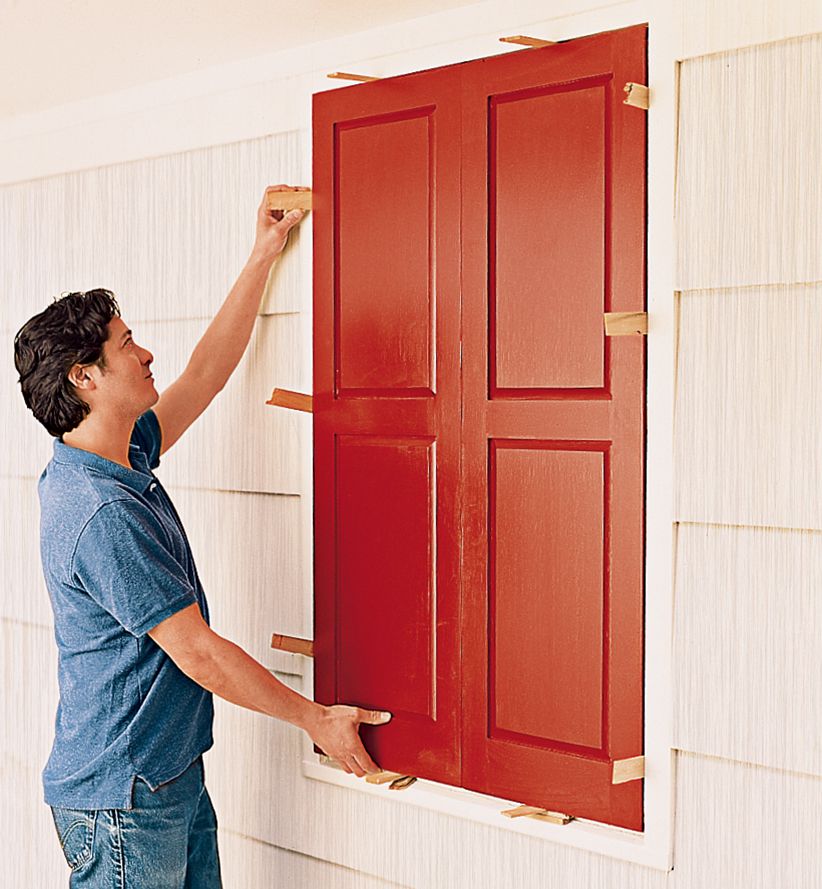
Hold the shutter to your marks and push a shutter-lok fastener through each hole until the head seats against the shutter face. They go in with hand pressure and a light tap, not a hammer.
If you’re using screws instead, fit a weatherproof washer under each head and stop as soon as the shutter is held. Snug, not tight. Overtightening is what cracks shutters and buckles siding, and it’s the most common way this job goes wrong.
Stand back and check the pair looks level before you do the next window. Shutters that are slightly off read as badly off from the street.
Rather Not Drill Into Your Siding?
Fair enough. Every hole through vinyl is a hole through the layer keeping water off your wall, and on a windy elevation it’s worth getting right. We fit shutters as part of siding work and on their own. Call us at (720) 683-6288 or request a free estimate.