
A railing is the most visible part of a deck and the only part governed by building code. Guards are required once a deck sits 30 inches above grade, and the height and spacing rules apply whichever material you choose.
Within those rules, there is a lot of room. Here are five options, what each does well, and what each asks in return.
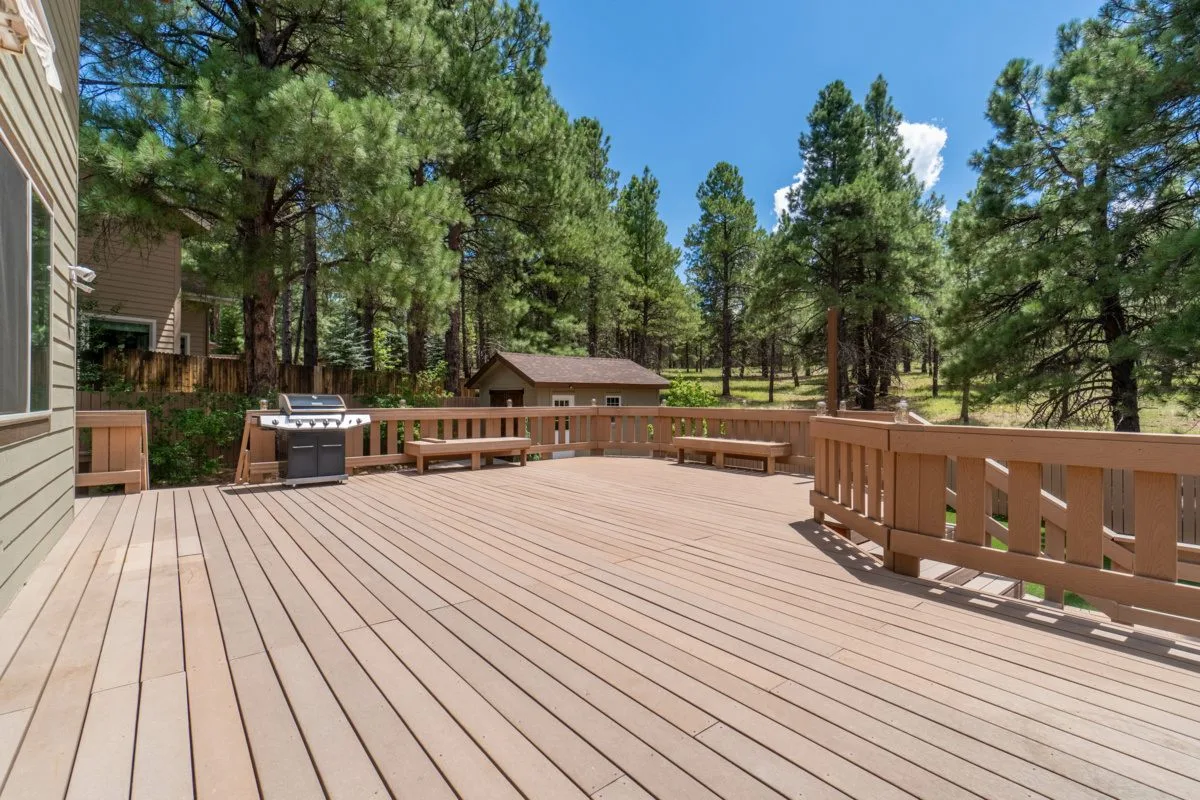
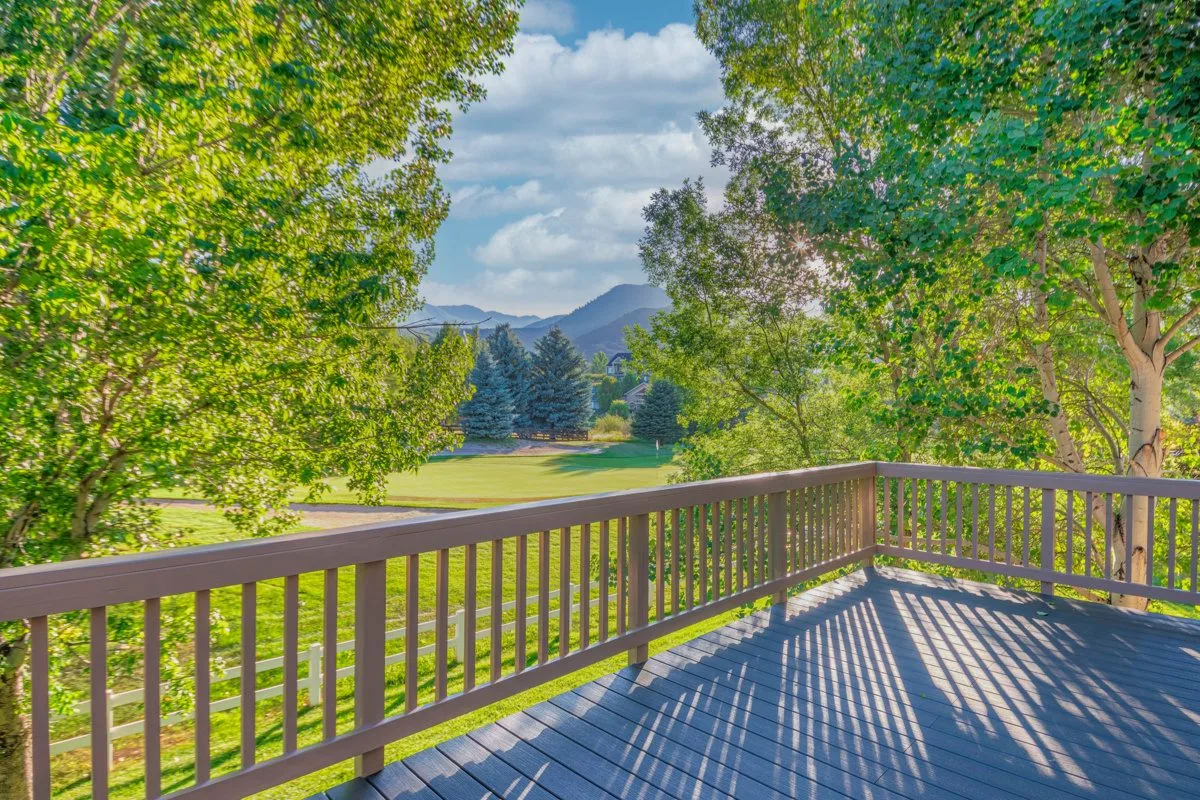
1. Wood Railings
Wood railings are a classic choice that adds a touch of warmth and natural beauty to any deck. One of the primary benefits of wood railings is their versatility. There are various wood types available, such as:
- Cedar
- Redwood
- Pressure-treated lumber
- Mahogany
With so many options, you can choose a material that suits your preferences and budget. Each wood type has its own unique characteristics, from the rich tones of cedar to the durability of pressure-treated lumber.
Wood offers the widest range of custom details, since it can be cut and shaped on site rather than ordered as a system. Vertical balusters are standard; horizontal runs look cleaner but need checking against local code, since some jurisdictions restrict them as climbable. The trade-off is upkeep. Wood railings weather faster than the deck surface because they take in the sun on all four sides, so expect to re-stain them more often than the boards.
2. Iron Railings
Iron gives you the strongest railing of the five and the most scope for ornamental detail, since it can be fabricated to a drawing rather than assembled from stock parts.
In Colorado, the thing to ask about is the finish. Powder-coated or galvanized iron holds up well; a painted finish will need attention where it meets the deck surface, because that is where water sits, and rust starts.
One of the great things about iron railings is their customization potential. Skilled craftsmen can create unique and personalized designs tailored to your specific preferences. You can incorporate ornate patterns and curves, or even incorporate elements like glass or wood for a striking and personalized look.
Ultimately, iron railings can elevate the aesthetic of your outdoor space while providing a sturdy and secure barrier. This makes it an ideal option when considering ideas for deck railing.
3. Composite Railings
Composite railings pair with composite decking and come from the same manufacturers, so colors and profiles match the boards rather than approximating them. They resist rot and insect damage and need no staining or sealing.
Two things to know. The color range is narrower than wood, which the section below already notes. Composite railings are a system rather than a custom build, so the design is set by what the manufacturer offers. Not only do these materials often contain recycled components, but they also help reduce the need for natural resources.
4. Glass Railings
Glass railings provide a contemporary look to any outdoor space, allowing for unobstructed views and creating an open atmosphere. With the use of either transparent or frosted glass panels, you can appreciate stunning scenery without compromising on style.
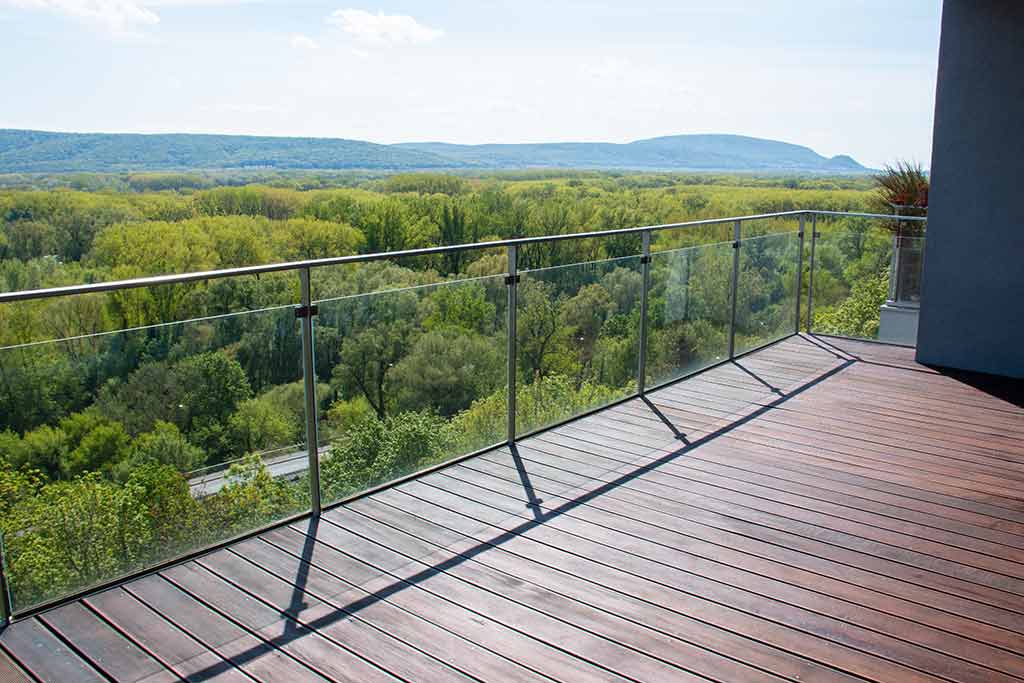
Glass gives you the view, which is why it suits foothills and mountain properties where the outlook is the point. Frosted panels give privacy where a deck faces a neighbor.
Two practical notes. Glass railings use tempered safety glass, which is a code requirement rather than an upgrade. And they show everything: dust, pollen, water spots, and at altitude, that means cleaning more often than you would expect.
5. Cable Railings
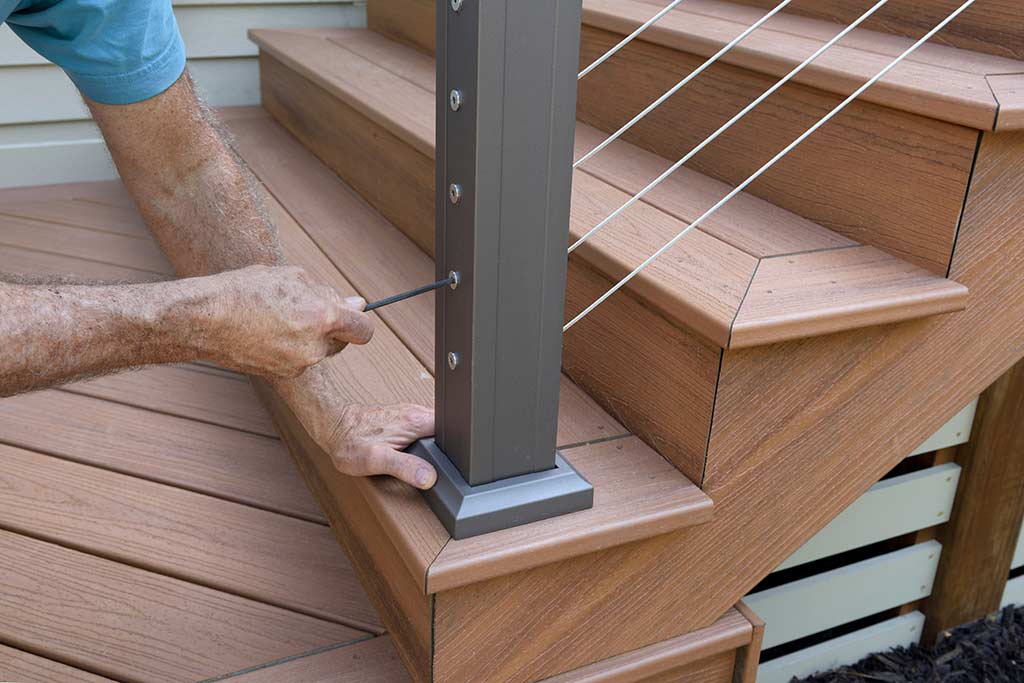
Cable railings are a popular choice for those seeking a modern and minimalist look for their deck. Stainless cable gives you a near-invisible barrier, which is why it suits decks where the view matters and a glass panel would be too much maintenance.
Cable railings are the most demanding of the five to build correctly. Posts take significant tension, so they need to be substantially framed, and the cables need re-tensioning periodically as they stretch. Spacing has to stay tight enough that a 4-inch sphere cannot pass between cables, and that is the detail inspectors check. With their unique look, you can’t go wrong with this option when searching for modern deck railing ideas.
6. Aluminum Railings
Powder-coated aluminum is the most commonly installed railing on new decks, and it is missing from most inspiration articles because it is not exciting. It does not rust, does not need painting, comes as a system that installs quickly, and costs less than iron or glass.
If you want the look of iron without the maintenance, this is usually the answer. It is also non-combustible, which matters in properties in wildfire areas.
Create a Stylish Outdoor Oasis with Durable Deck Railing
Style is the easy part. The decisions that matter are whether your deck is high enough to need a guard, whether your jurisdiction restricts horizontal or cable infill, and whether the posts are framed to take the loading your chosen system puts on them.
We handle all of that as part of the build. Learn more about our deck building and replacement services, or if your property is in a wildfire area, see how to make an existing deck fire-resistant.